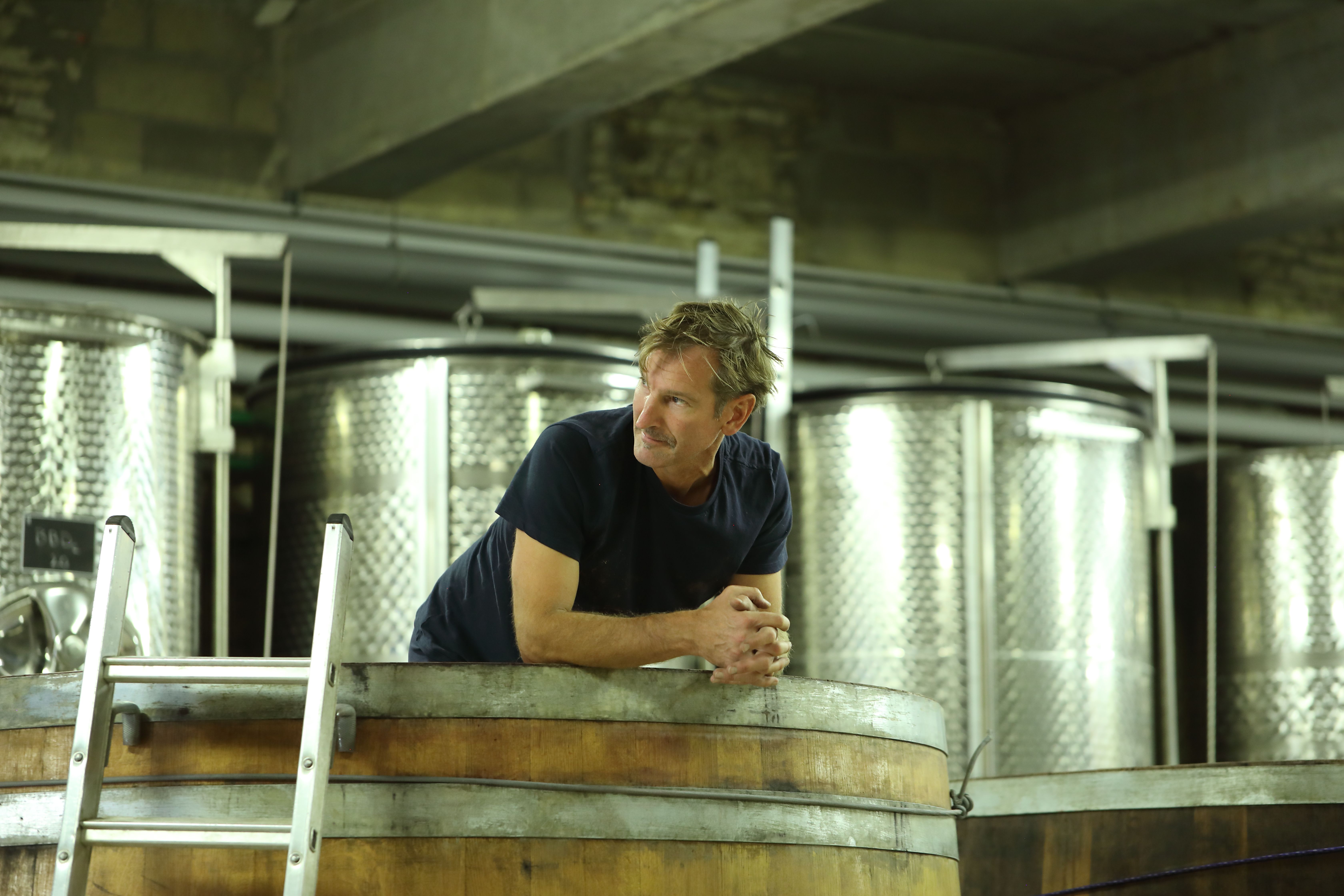
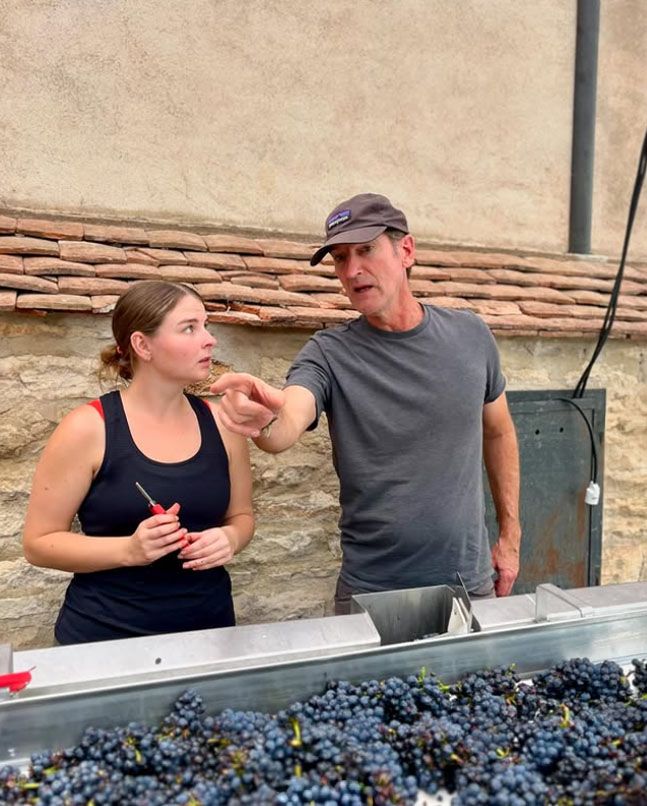
Indianapolis-born Brian Sieve has been the winemaker at Domaine de Montille in Volnay since 2010, drawn by a desire to work at an estate focused on organic and biodynamic farming. Founded in the mid-18th century, Domaine de Montille is one of the Côte d’Or’s most historic, family-operated estates and an early advocate of domaine-bottling. It is currently run by ninth-generation winemaker Etienne de Montille, who, alongside his father Hubert, has ensured the domaine’s reputation for quality endures today. Brian’s work with Etienne has led to some of Burgundy’s most sought-after wines and, in 2017, saw the duo collaborate on Racines in California's St Rita Hills.
During his recent trip to London, we spoke with Brian about his journey into wine and, subsequently, Burgundy, his work at Domaine de Montille and the inspiration behind a return to America with the founding of Racines.
For more information about purchasing Domaine de Montille and Racines wines, please contact your Account Manager. Not yet a customer? Contact Us to discuss opening an account.
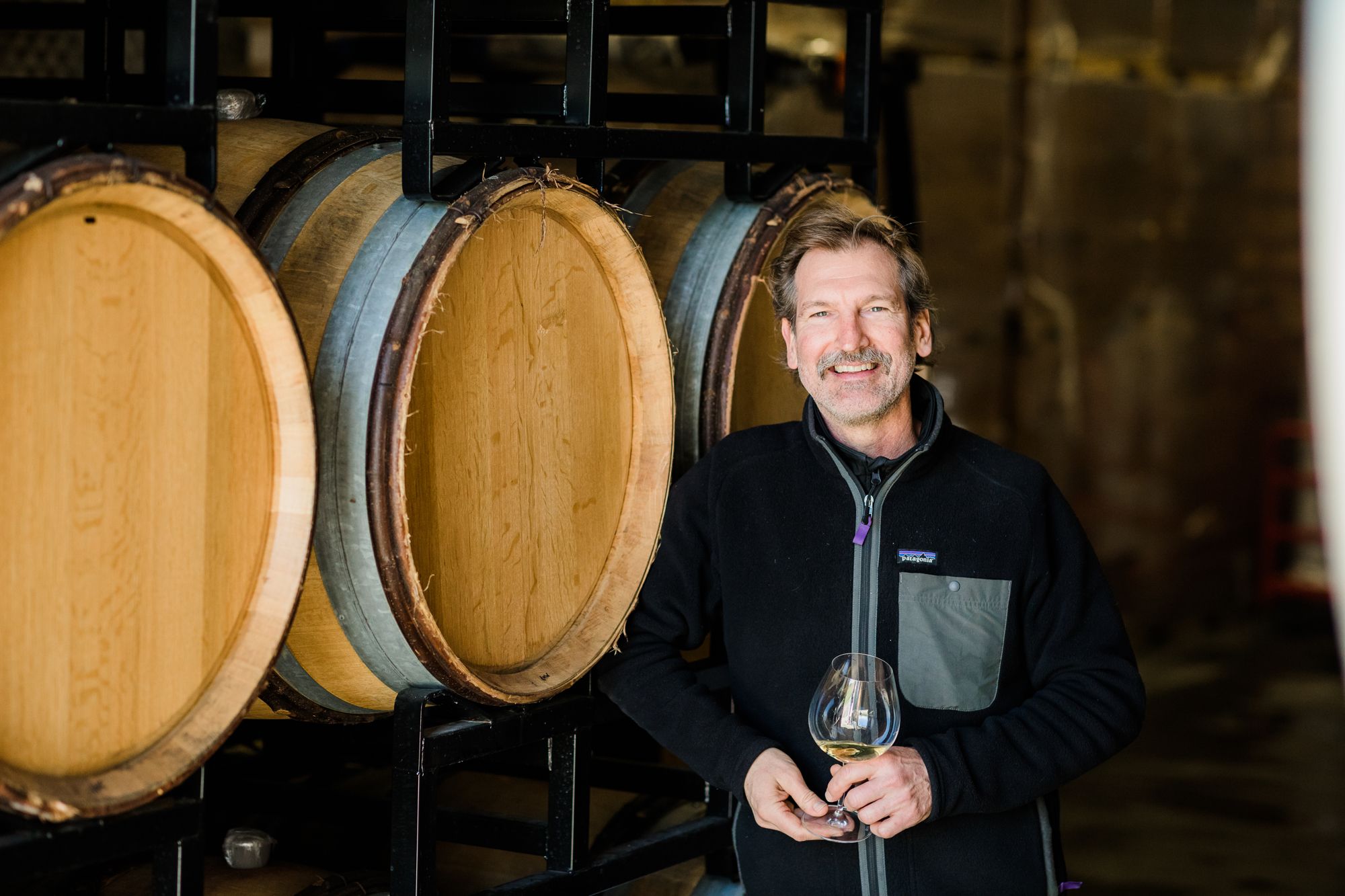
What first drew you to wine, and eventually to Burgundy?
My route into wine was not especially direct. I grew up in Italy and Germany, where wine was simply part of everyday life. It was always on the table and was never treated as something particularly mysterious. As I got older, I realised I was drawn to professions that combined physical work with intellectual challenge. Winemaking seemed to offer exactly that balance. Half the job is practical and hands-on, while the other half requires constant problem-solving, observation and decision-making.
My wife and I were living in Steamboat Springs, Colorado. We had the opportunity to work a harvest in California, and that experience completely changed our direction. I already had a background in chemistry and biology, so developing the technical side of wine was a natural progression. We quickly discovered that we loved both the work itself and the opportunities it created to travel and experience different wine regions. After California we completed another harvest in New Zealand before returning to California for full-time roles in the industry.
As our careers developed, we reached a point where we could either settle permanently in Northern California or take a leap and move to Europe. My wife, who grew up in Switzerland and Belgium, was the one who really pushed us towards the second option. We both felt that if we did not do it then, we probably never would. Looking back, there was never a rigid master plan. We have always been comfortable following opportunities rather than forcing them. At the time we had no children and very few constraints, so it felt like the right moment to see where the journey might take us. California was in danger of becoming "golden handcuffs", good jobs, a great lifestyle and a clear career path that would eventually make it difficult to leave.
Burgundy seemed like the obvious destination. For anyone fascinated by Pinot Noir and Chardonnay, it’s the reference point. We originally intended to stay for only a few years and see where it led. Fifteen years later, we are still there!
Interestingly, we came for the Pinot Noir but stayed for the Chardonnay. Like many people, I was initially drawn by the mystique of Burgundy's reds. I had worked for producers in California whose reputations were built around Pinot Noir, and that shaped my perspective. Burgundy reminds me a little of a ski town in that respect. People often arrive because of one attraction and then discover everything else. We came for the Pinot Noir, but once we experienced the Chardonnays and the wider rhythm of life in Burgundy, we stayed.
Once I arrived in Burgundy, I began to appreciate just how extraordinary the white wines could be. These days, if I go into my cellar, there is a very good chance I will come back with a bottle of white Burgundy rather than Pinot Noir.
How did Domaine de Montille enter the picture?
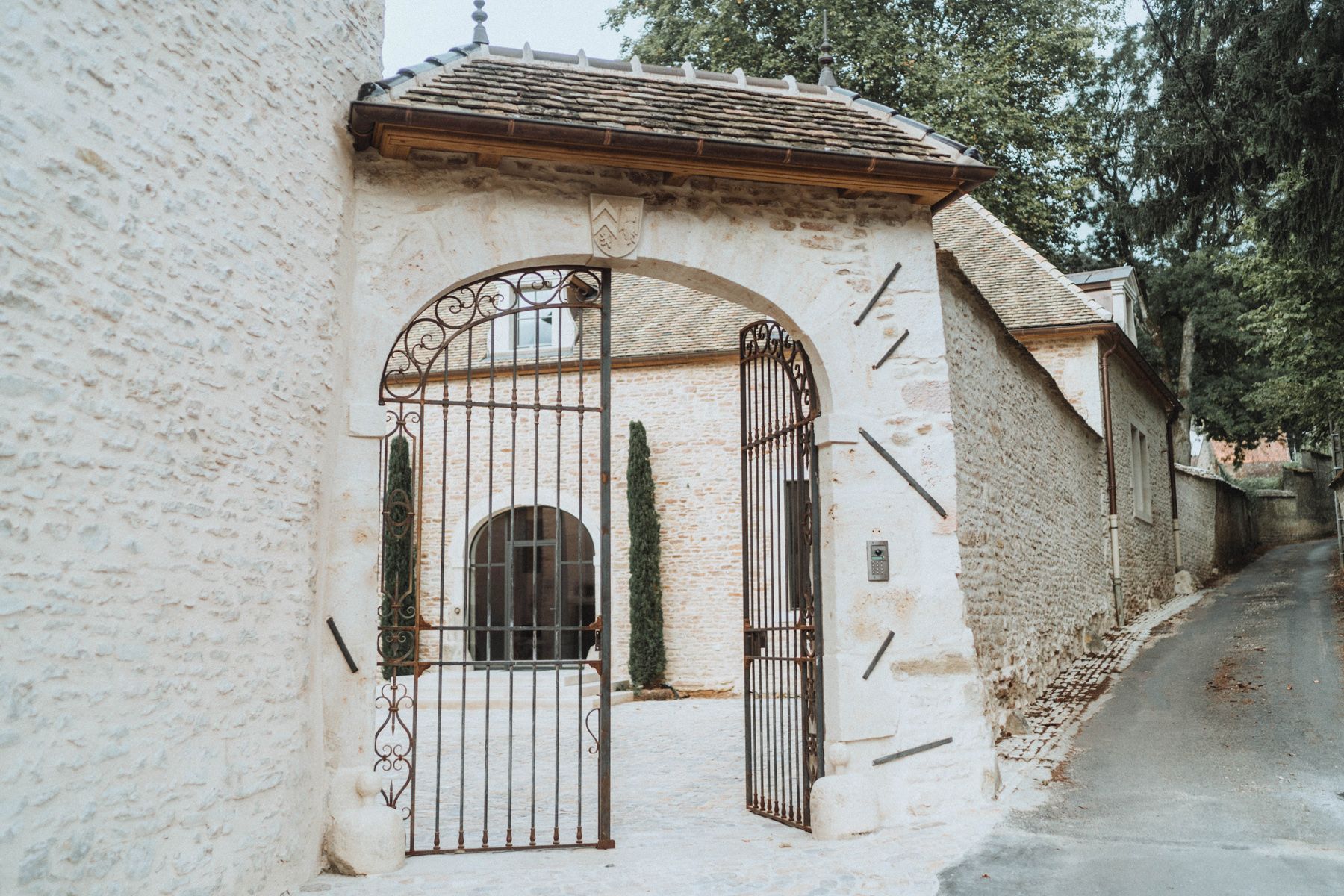
I was specifically looking to work with organic and biodynamic producers in Burgundy. I wanted to work somewhere that viewed the vineyard as a living system and took farming seriously. Before I even received my visa, Étienne de Montille called me and asked about my situation. He simply said, "When you get your visa, give me a call." It turned out to be a very soft landing into Burgundy and a remarkable opportunity.
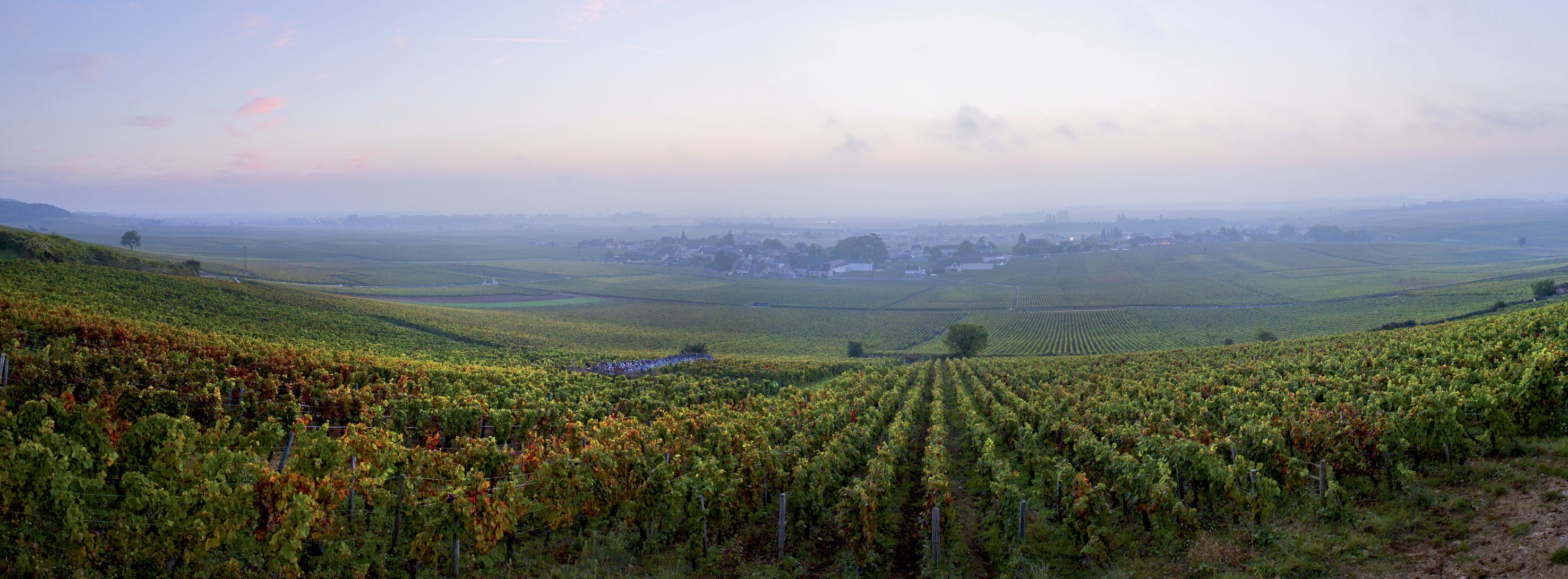
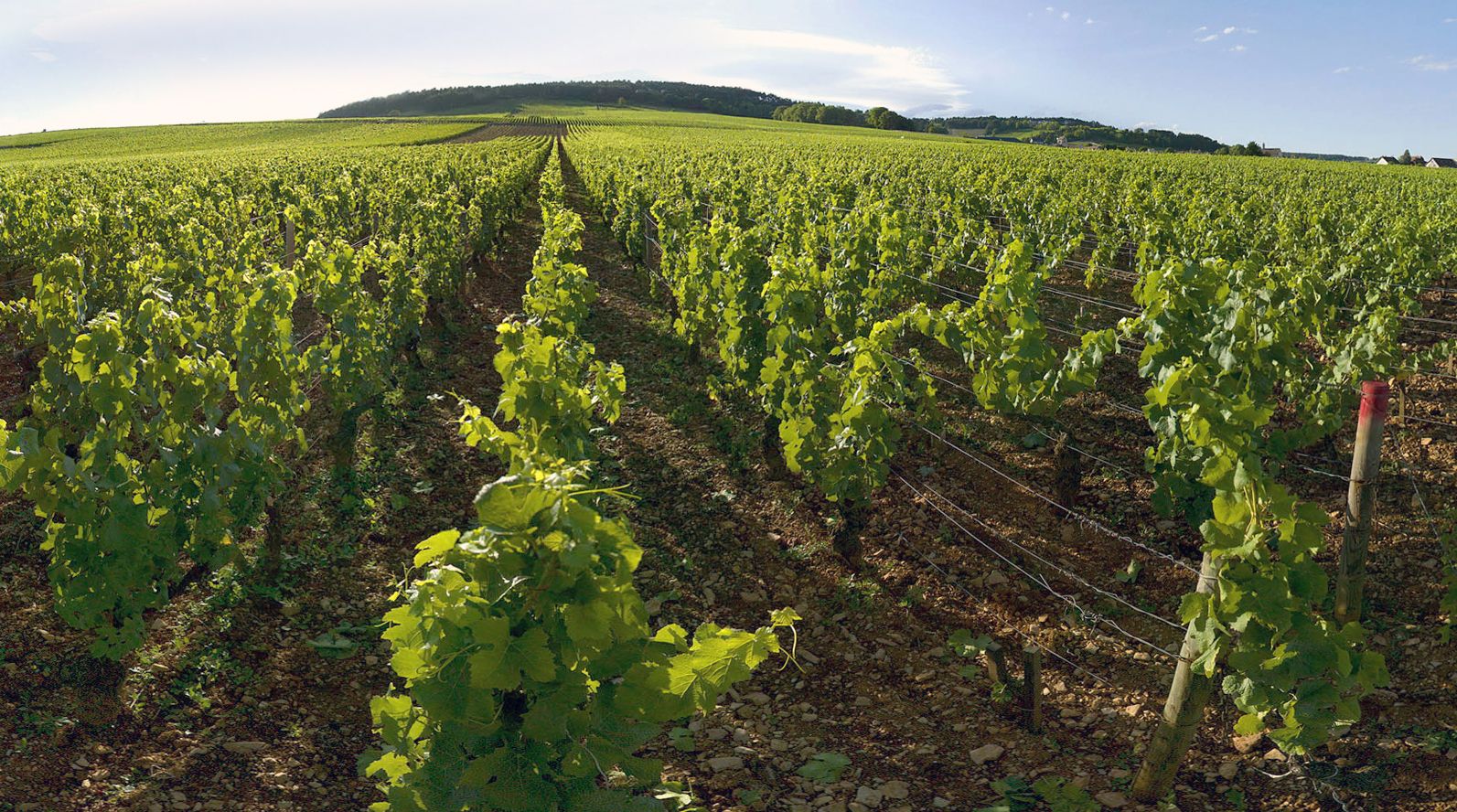
What appealed to me then, and still appeals to me now, is the diversity of the vineyards. Domaine de Montille farms more than 36 hectares, which is substantial by Burgundy standards. The holdings stretch from Chassagne-Montrachet in the south all the way to Clos de Vougeot in the north. That means you are constantly dealing with different exposures, soil types, vine ages and farming challenges.
Some vineyards are more vulnerable to disease pressure in wet years and require careful management. Others, such as older parcels in Chevalier-Montrachet, are worked with horses because the vines are old and delicate. The aim is not simply to avoid soil compaction, although that is certainly a benefit. It is also about treating the vineyard more gently and reducing mechanical impact on both the soil and the vines themselves.
The benefits are broader than simply reducing compaction. Working with horses allows us to be much gentler around old vines and work with a degree of precision that is difficult to achieve mechanically. It is considerably more labour-intensive and expensive than tractor work, so it has to be justified. In certain vineyards, however, we have seen meaningful improvements surprisingly quickly.
Do you have favourite vineyards to work with?
One of the joys of working at de Montille is the sheer diversity. Burgundy can often be discussed in very romantic terms, but the reality is that every site presents its own challenges. One parcel may require extremely careful disease management in a wet year, while another demands a completely different approach because of its age, training system or soil structure. There is no single solution. The constant need to adapt is what keeps the work fascinating.
I will say that the Côte de Beaune is an extraordinarily beautiful place to work. The valleys are more open, the slopes are dramatic, and in certain places you can look all the way towards Mont Blanc. There is a sense of tranquillity there that is quite different from parts of the Côte de Nuits. Yet at the same time, the Côte de Nuits carries its own weight of history and prestige. You are often surrounded by vineyards and domaines whose names have been written into the history of Burgundy for generations.
Has the domaine continued to evolve since you joined?
Absolutely. I do not think Étienne understands the concept of standing still. The domaine has constantly evolved, not only in terms of farming but also in terms of its vineyard holdings. The estate today looks quite different from the one I joined.
One thing he has done particularly well is acquire vineyard parcels that strengthen the overall coherence of the estate. Rather than accumulating tiny fragments scattered across Burgundy, he has focused on parcels that work operationally and stylistically within the domaine. Many acquisitions have been half a hectare to a hectare in size, allowing the team to farm them efficiently.
The result has been a gradual concentration around key vineyards. Certain peripheral holdings have been sold, while stronger positions have been built in vineyards that are central to the domaine's identity. It is not simply about prestige. It is also about practicality. If your base is in Volnay, repeatedly transporting tractors and equipment long distances into the Côte de Nuits creates significant wear and tear. That reality has encouraged us to rethink how we farm and organise the estate.
Today some vineyards in the Côte de Nuits are horse-ploughed, and we even collaborate with neighbouring domaines on certain vineyard operations to improve efficiency and sustainability. Increasingly, we think about farming in a more collaborative way. It is a practical response to the realities of modern viticulture, while also reducing unnecessary movement of equipment and resources. It is a more holistic way of thinking about vineyard management.
How do you approach winemaking?
One subject that often comes up is whole-cluster fermentation. I think there are two broad camps in wine. There are people who love whole bunches and people who do not. Part of that comes down to personal sensitivity. Some tasters are much more sensitive to the herbal or pyrazine-derived characteristics that stems can contribute than others.
For me, whole clusters are simply another tool. When used well, they can bring complexity, lift and additional aromatic character. However, they are not appropriate in every vineyard or every vintage. A great deal depends on stem maturity, vine health, disease pressure and the specific characteristics of each parcel.
Experience is critical. The longer you work with a vineyard, the more you understand how stems behave in different years, on different soils and with different plant material. That knowledge allows you to fine-tune decisions parcel by parcel rather than applying a single recipe everywhere. Burgundy's best practitioners of whole-cluster fermentation are rarely following ideology. They are drawing on decades of experience with individual sites.
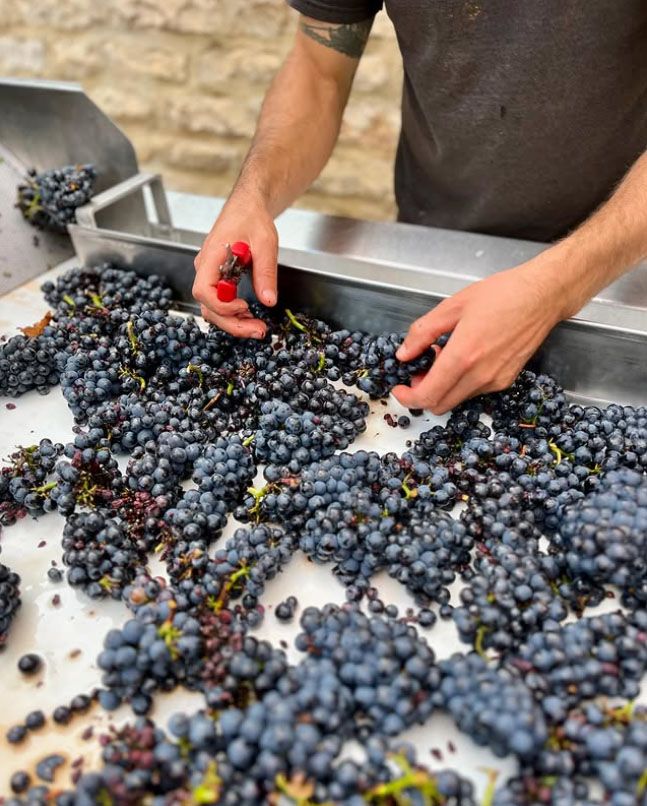
In difficult years, whole-cluster fermentation can become much more of a gamble. Disease pressure, green stems or uneven ripening may force you to rethink plans entirely. Sorting becomes incredibly important. Whatever enters the fermenter must be pristine. The key is flexibility rather than ideology.
Even practical considerations can influence decisions. We work with traditional wooden fermenters that need to be filled properly. Sometimes fermentation choices are influenced not only by the vineyard but also by the realities of the cellar and the vessels available. Winemaking is rarely as simple as people imagine.
How do you view Burgundy today?
One challenge facing Burgundy is the changing economics of fruit and vineyard ownership. Burgundy has become a much more expensive and complex place to operate than it was twenty years ago. Vineyard prices have risen dramatically, equipment costs continue to increase, and growers face constant decisions about investment, labour and farming methods. For many smaller domaines, moving towards more labour-intensive farming can require significant changes to staffing, infrastructure and even their commercial model.
Over the past two decades, more and more growers have chosen to bottle their own wines rather than sell fruit. That has undoubtedly raised quality across the region, but it has also made fruit increasingly expensive and difficult to access for smaller négociant projects.
From the perspective of an estate that owns vineyards, it often makes more sense to focus resources on your own domaine wines. That is understandable, but it does mean that the traditional négociant model is becoming harder to sustain.
What led you back to California to collaborate with Étienne on Racines?
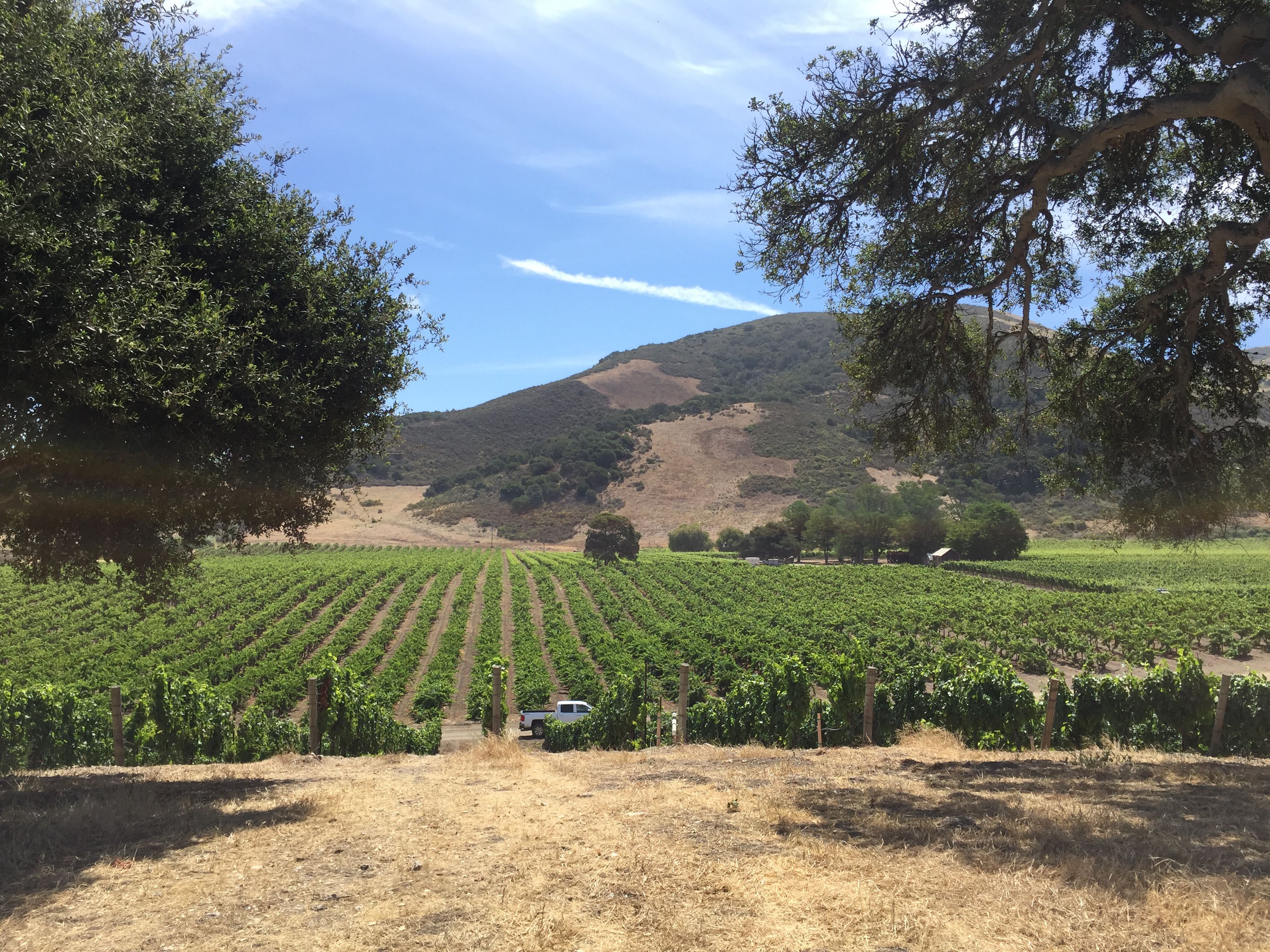
Racines grew out of a desire to create a genuine estate in California rather than simply buy fruit and make wine. From the outset, we wanted to build something with its own vineyard foundation. We looked carefully at different regions and focused on three things: access to exceptional vineyards, local expertise and land that was still available for planting. Sta. Rita Hills stood out on all three counts.
What fascinated us was the combination of diatomaceous earth, marine sediments, sands, chert, clay and pockets of limestone. Individually these soils are very different from Burgundy, but together they create wines with the same sort of chalky mineral tension that we love. They produce Pinot Noir and Chardonnay with precision, freshness and energy. That really resonated with us.
Today Racines includes a ten-hectare home vineyard that was planted between 2018 and 2020 on land that had previously been used for livestock. The first single-vineyard wines from those plantings were produced in 2023. Additional land has also been reserved for future development, reflecting the long-term ambition to build the vineyard base of the estate.
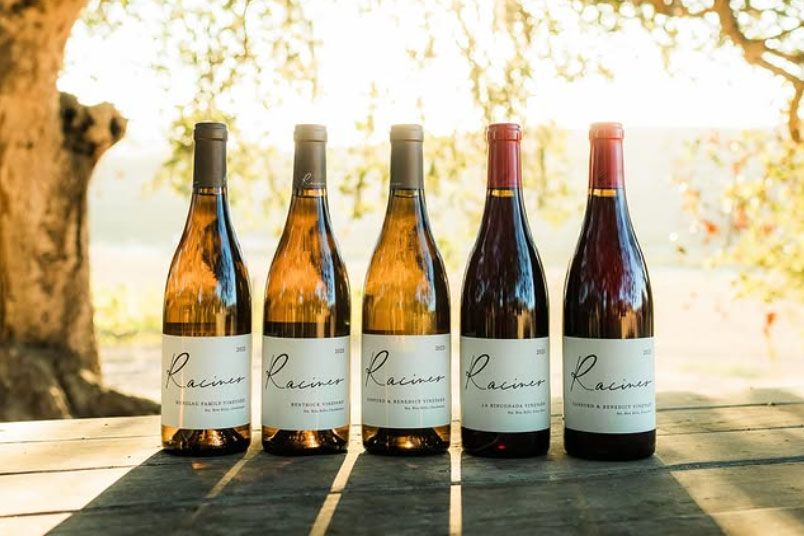
Alongside our own vineyards, we work with some of the great sites of Sta. Rita Hills, including Sanford & Benedict, La Rinconada and Bentrock. Sanford & Benedict, planted by Richard Sanford in the early 1970s, is one of the foundational vineyards of the region and remains one of its most important sources of fruit.
Stylistically, Sta. Rita Hills is capable of producing very different expressions of Pinot Noir. Some producers focus on tension, precision and restraint, while others pursue riper fruit and greater opulence. The remarkable thing about the region is that both approaches can succeed because the climate gives growers tremendous flexibility. The season is long, stable and relatively free from the harvest-time weather pressures that often shape decisions in Burgundy.
Do the Burgundy and California projects influence one another?
Increasingly, yes. Racines has become a second laboratory. Every year we learn more, and every year we make small adjustments. The challenge is to keep evolving without overreacting. Winegrowing is full of variables, and dramatic changes often create more problems than they solve.
What has surprised me most is how often lessons from California make me reconsider things I do in Burgundy. It is easy to assume that Burgundy teaches California, but increasingly I find the opposite happening as well. Sometimes I realise that a practice I have followed for years is producing a different result than I originally thought.
Working in two very different regions forces you to question assumptions and look at viticulture and winemaking from new angles. In many ways Burgundy and California have become two laboratories. They are very different environments, but each helps us better understand the other. The objective in both places remains the same, to produce wines with precision, energy and a clear sense of place.
For more information about purchasing Domaine de Montille and Racines wines, please contact your Account Manager. Not yet a customer? Contact Us to discuss opening an account.