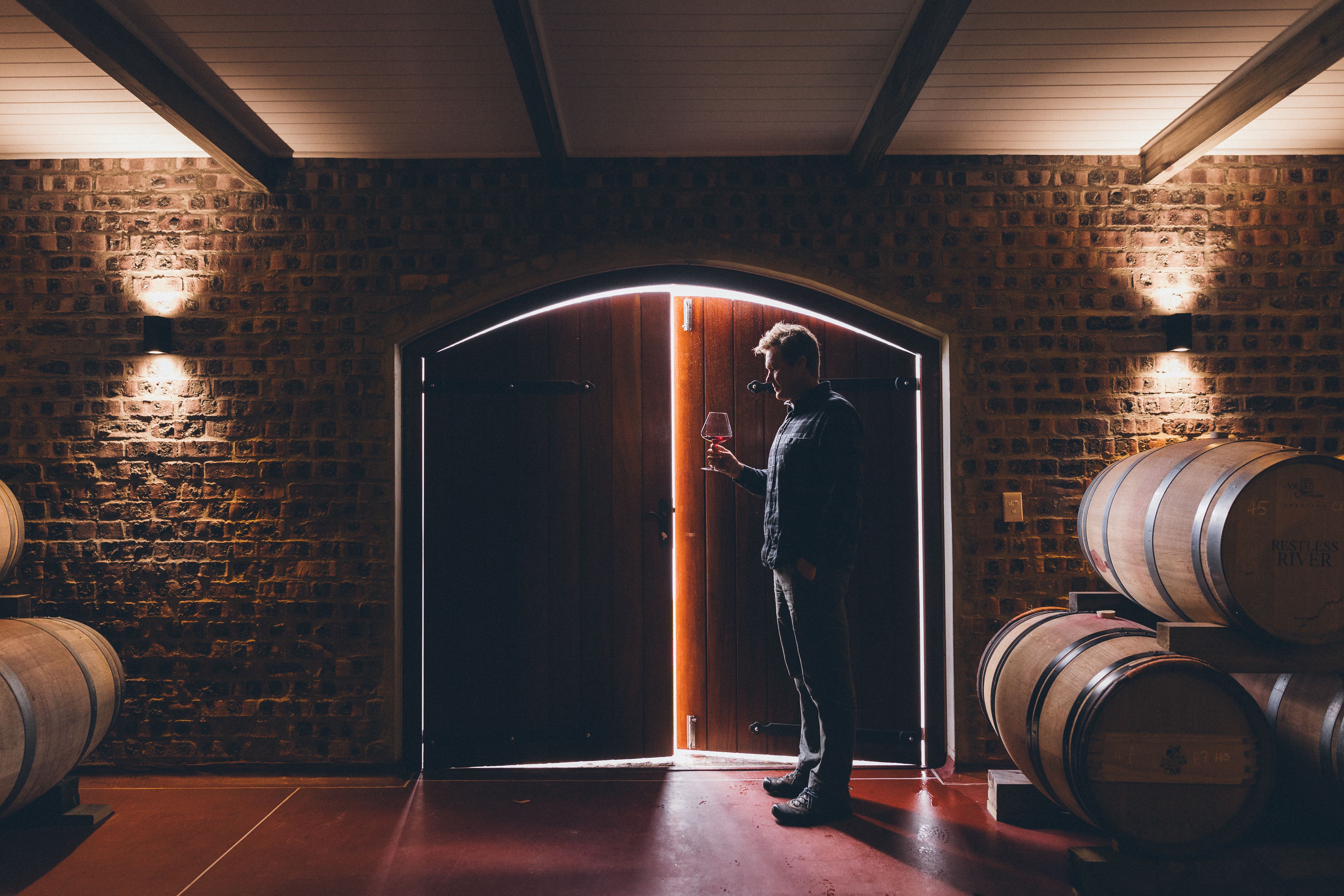
In 2004, Craig and his wife Anne bought a run-down sheep farm in the Upper Hemel-en-Aarde Valley, with a view to raising their family away from the city. By chance, the farm was also home to the area’s oldest remaining Chardonnay and Cabernet Sauvignon vines, planted in 1998. Farming these vines became a serious passion, leading Craig to start making wine in a small, converted garage on the estate. In 2012, the Restless River wines were officially launched and have continued to impress ever since.
In this interview, we speak with Craig about the route that led him to a second career in wine (having originally worked in TV production), his surprising familial connection to what is now the Restless River farm, how the Hemel-en-Aarde has changed in the 20+ years since he arrived there and how he works in order to achieve a precise sense of place in the Restless River wines.
For more information about purchasing Restless Rivers' wines, please contact your Account Manager. Not yet a customer? Contact Us to discuss opening an account.
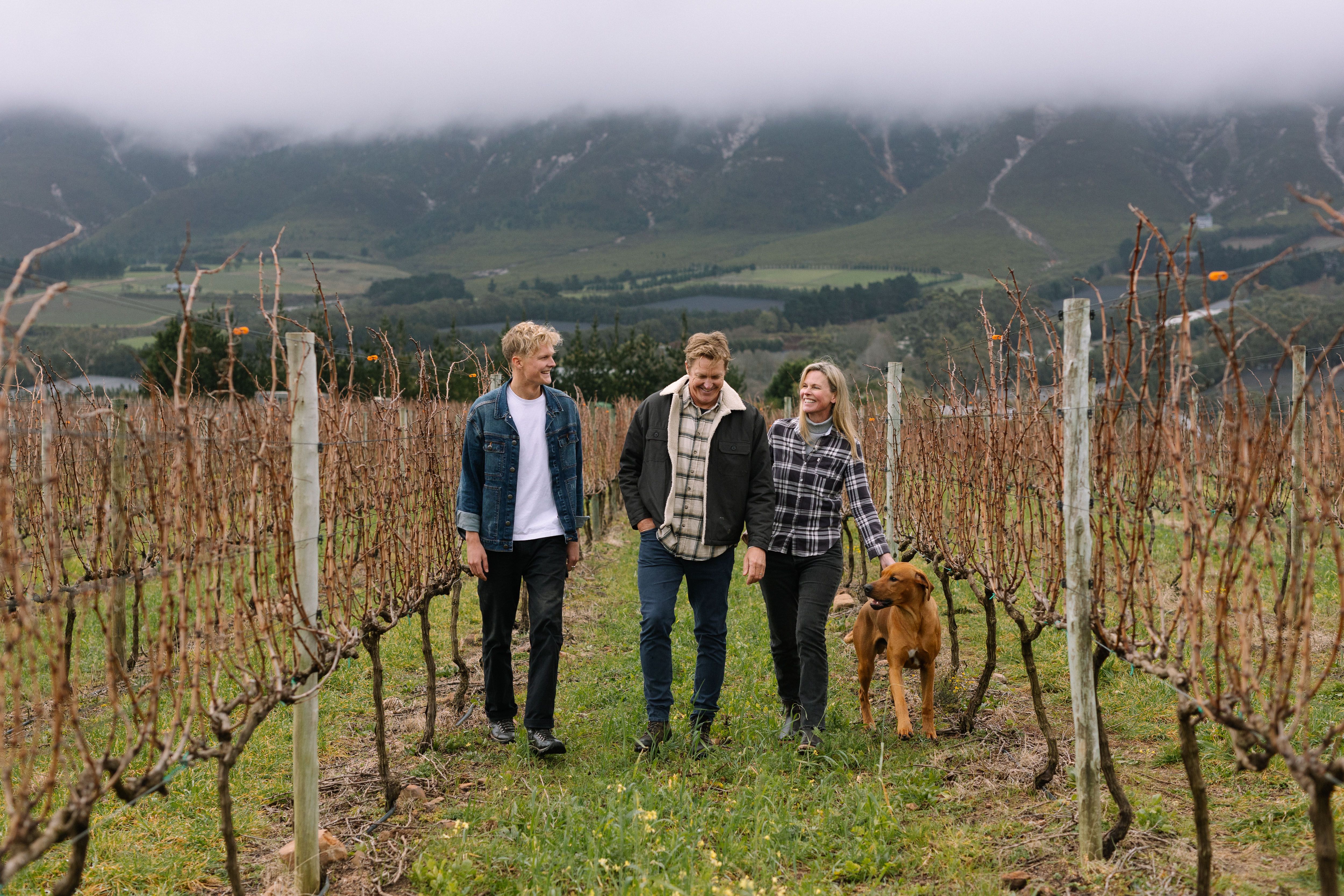
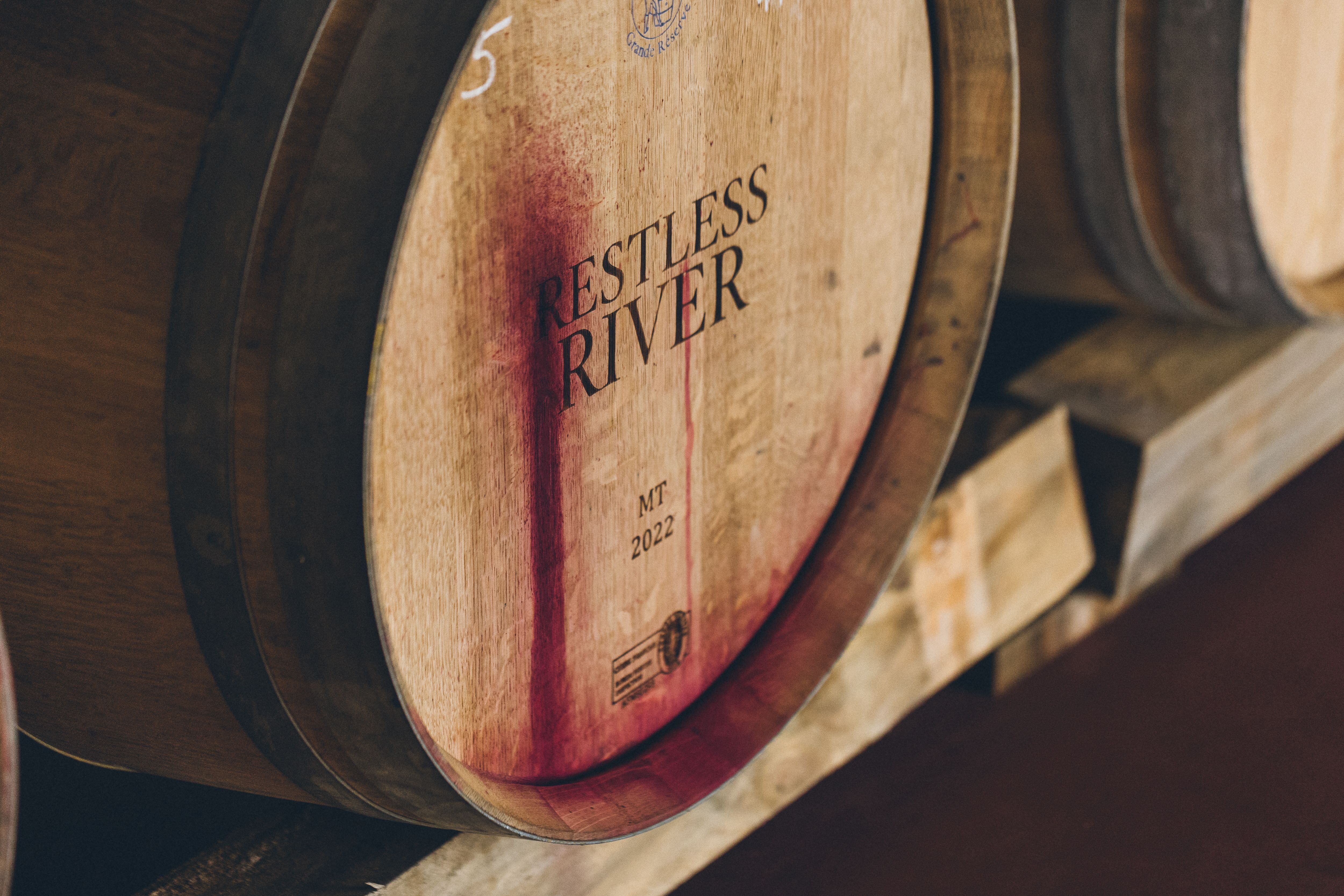
(R) Craig with his wife Anne and son Luke
What made you decide to pursue wine as a second career?
It was not a switch that suddenly went on. It happened gradually over time. Even while I was busy with my first career, I always had a strong interest in wine and an even stronger pull towards farm life. Being out of the city always felt more natural and comfortable to me.
At first my interest in wine was mostly from the perspective of drinking and enjoying it, but over time that interest became more serious. In the late 1990s and early 2000s, Anne and I bought a small farm that we used as a weekend retreat after our son, Luke was born. It gave us a chance to escape the city and spend time in the countryside together as a family. Being on that farm really accelerated my interest in both farming and winemaking.
Very few people know this, but I actually planted a hectare of vines on that farm as far back as 2002, with the intention of starting to grow and make wine. Then in 2004 we decided that we wanted to move out of Cape Town, so we bought Klein Hemel farm in the Hemel-en-Aarde Valley, where we still live 22 years later. At the time it was a rundown property with no buildings or roads, but it had a few hectares of vineyard that had been planted in the ‘90’s. In 2005 I harvested those grapes and made some wine in a small wooden shed. It was not much, but it was a start. After that first vintage, I simply never stopped.
Because I had a young family and was already running a business, I had responsibilities and I could not take the time to formally study winemaking. Despite that, it always felt as though wine found me rather than me finding wine.
Did you know about the family connection with the farm when you bought it?
I was aware of it, but I had never really looked deeply into it at first. Then, when you have children, you start thinking more about where you come from and your family history. The more I looked into it, the more interesting it became. It turns out that one of my ancestors, with the same surname, was the first European settler to set up home and farm in the Hemel-en-Aarde Valley, in the 1700’s. Some local historians believe he may have been the guy who gave the valley its current name. Originally the area was known as, Attakwaskloof, meaning “the Valley of the Atta people,” but there is a strong possibility that he was responsible for naming it Hemel-en-Aarde, which is the name given to his original farm. Over the last few hundred years, his original farm was subdivided into smaller portions.
It feels quite serendipitous that you naturally gravitated back there without intentionally searching for that connection. What is it about the Upper Hemel-en-Aarde specifically that makes it so suited to fine wine?
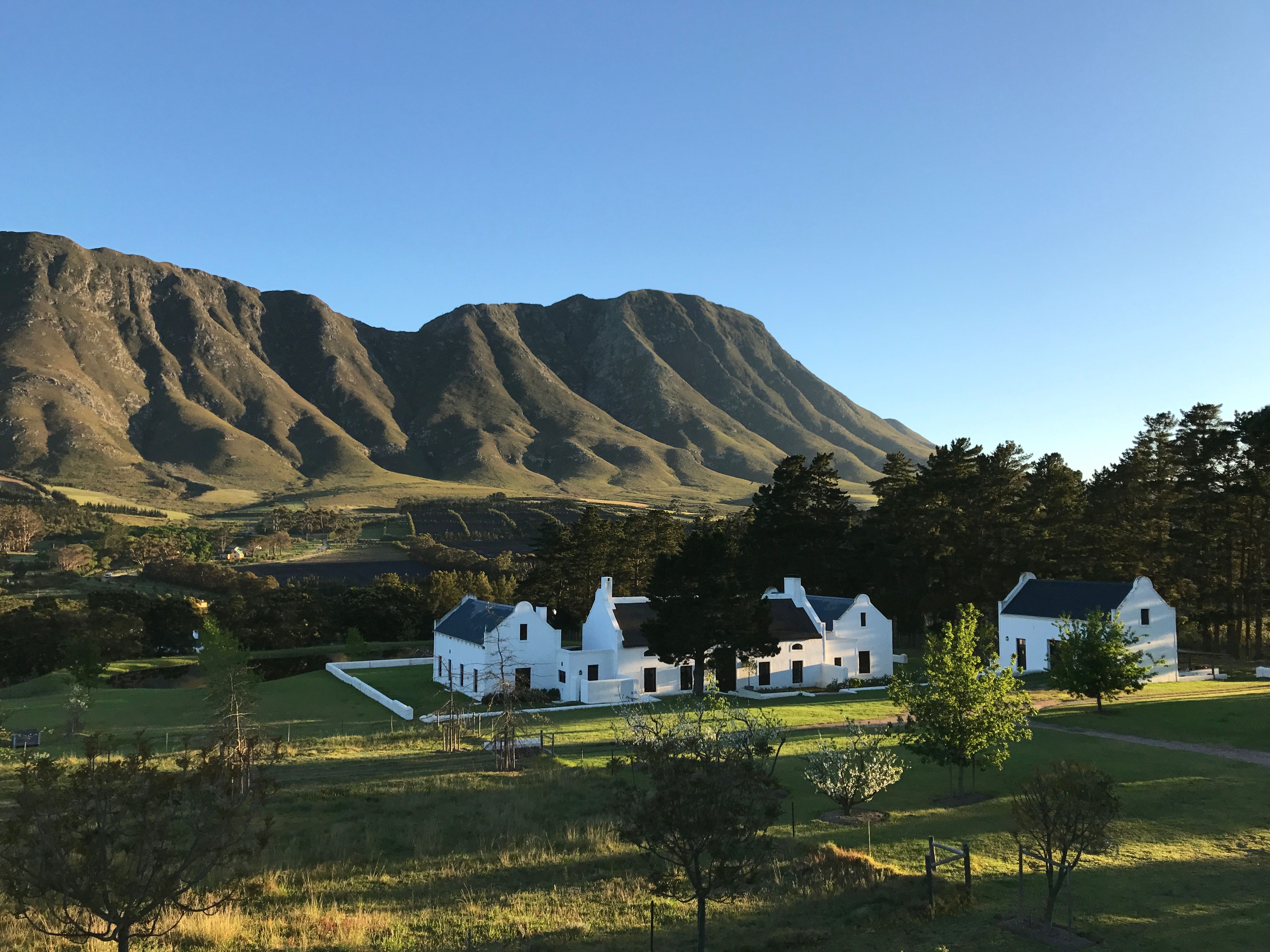
For me it comes down entirely to terroir, which means the climate, the soils and the vineyards. It is a cool growing region, and that allows the growers to produce wines with natural elegance and refinement.
It is also a fairly marginal area for viticulture, so even if you wanted to push yields, nature would not really allow it. Nature restricts us to lower yields and slower ripening, and that creates balance and finesse. If you farm with care and sensitivity, and keep things gentle in the winery, the results are wines with purity and expression of place.
Did you ever consider working somewhere else, like Stellenbosch?
No. I always felt there was something very special about the Hemel-en-Aarde. I have also never lived more than about 20 kilometres from the ocean and being close to the sea has always been important to me. Where we are now, I can drive about 10 kilometres to my local surf break. The ocean is part of everyday life here. I wanted to grow grapes on land that I owned and farmed myself. Being able to do this at close proximity to the ocean was extremely important to me. This privilege is rare, but it was not by accident.
How would you describe your philosophy in the vineyard?
I think the most important thing is to pay close attention to nature. Nature already knows what works. You fundamentally have to observe carefully and be proactive not reactive.
You also cannot be greedy. If you want maximum output while putting very little back into the land, you usually end up relying on chemical shortcuts that may help in the short term but can damage the soil structure and soil life in the long term.
I love our farm deeply and I want to leave it in an even better condition for the next generation. Once that becomes your mindset, you naturally become a better custodian of the land. For me, a healthy respect for the land is the foundation for everything we do.
How do you maintain and improve soil health in practice?
We work with composts and increasingly with biochar, which we have been exploring over the last few of years with good results. We have also reintroduced animals onto the farm. Cattle are returning (the younger generation of our original heard) and we use ducks to help with snail control. We also have wild roaming antelope and of course, baboons. This is an ecosystem that is pretty natural.
We farm without tilling; we pay attention to levels of carbon in the soil. We rotate cover crops rather than planting the same thing repeatedly. Depending on what the soil needs, we will use combinations, for example, faba beans, tiller radish, oats, rye, vetch and clover. We are also at the start of an innovative pilot project that we initiated, using various strands of mushroom and fungal spoors to both contribute to soil health and help fight certain vine pests such as mealy bug.
A lot of it simply comes down to observing how healthy, unfarmed land functions naturally and then trying to maintain that balance in the vineyard, rather than disrupting it.
The Hemel-en-Aarde really is a very special place. There is an enormous amount of life, both flora and fauna, and you need that biodiversity in order to create a healthy, balanced ecosystem. Our job is to look after it and keep it that way.
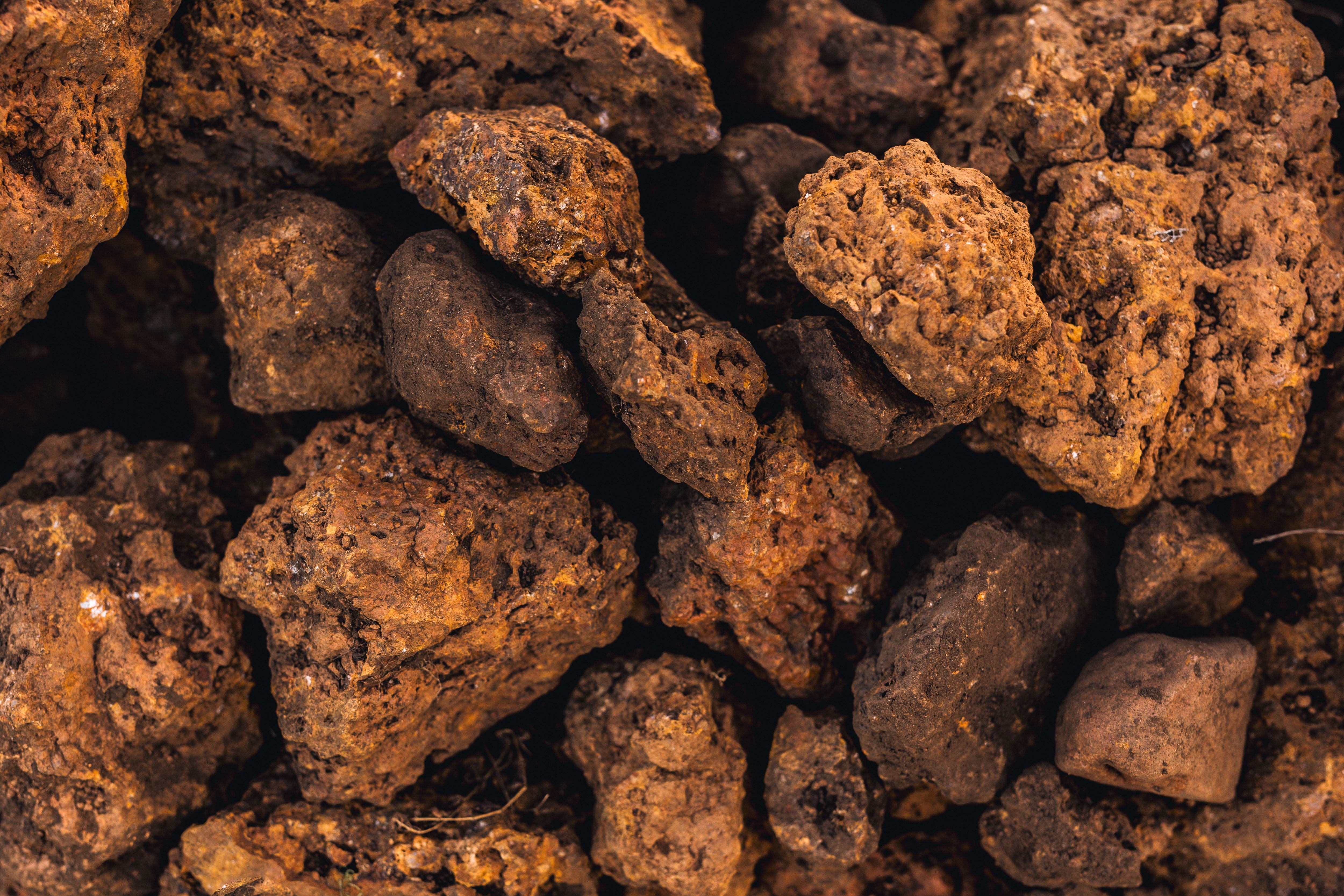
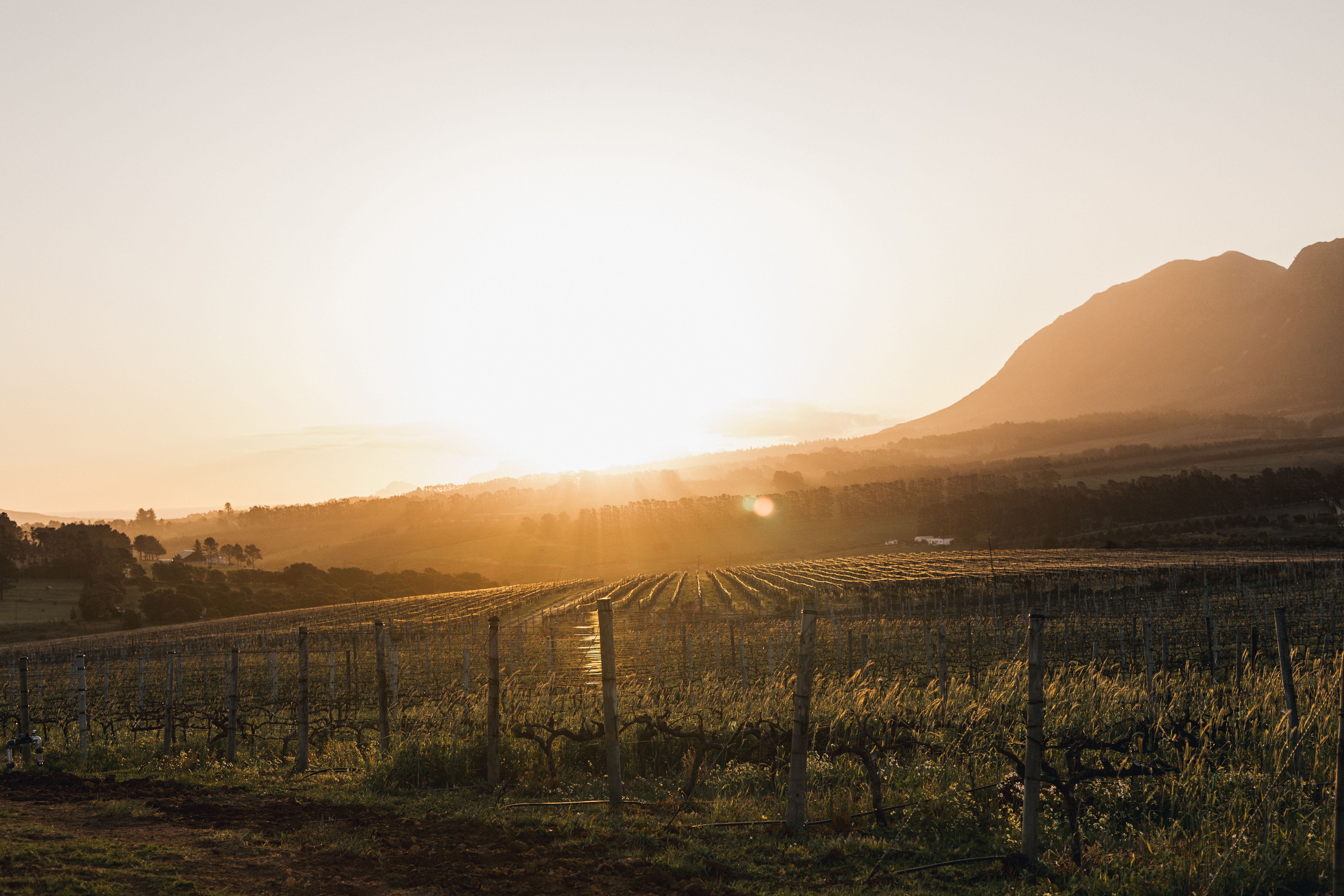
(L) Restless River's Ferricrete soils, (R) The 'Main & Road & Dignity' vineyard
Have you done much soil analysis over the years?
A lot. Every three years we map and analyse our soils for chemical and mineral composition, and carbon content. We overlay that data with aerial vineyard maps so we can monitor how things evolve over time, and where attention needs to be prioritised.
All the newer vineyards you have planted are also registered as single vineyards. Is that part of a long-term vision?
Completely. I am thinking 30 or 40 years ahead. Great wines come from mature, healthy vineyards, and somebody has to plant those vineyards now if future generations are going to benefit from them later.
That is also why we introduced the newer, 'Klein Hemel' Pinot Noir and Chardonnay wines. The vineyards are still young, and I think it would be premature to bottle every site separately and present them as single-vineyard wines. We blend our younger vineyards together and give people the opportunity to experience Restless River at a more accessible price level while those younger vineyards continue to mature.
You have chosen to stay very focused varietally as well.
Yes. We made a decision some time ago to focus purely on Chardonnay, Pinot Noir and Cabernet Sauvignon. We do not want to start planting every possible variety. Cabernet is already unusual enough for the area, and it works very well for us. After 22 years farming here, we understand these three varieties well and how to best grow them on Klein Hemel.
Main Road & Dignity is particularly fascinating because Cabernet still feels unexpected in Hemel-en-Aarde. Why does it work there?
When people ask why Cabernet, I always think the better question is why not. The first vineyards in the area were planted in 1976, which in wine terms is relatively recent. There was no reason not to experiment and see what was possible.
There is a huge misconception about growing Cabernet in the Hemel en Aarde. The cooler climate is actually what makes Cabernet work so well here. Cabernet benefits enormously from the longer hang time the grapes experience. In warmer regions, sugars accumulate too quickly and growers often have to pick before the tannins and phenolics are fully ripe. In our climate, the grapes can stay on the vine longer without alcohol levels becoming excessively high or the acids excessively low, which allows for greater phenolic ripeness while still preserving freshness and balance.
The vineyard site also plays an important role. Predominantly north-facing and trained low to the ground, among ferricrete rocks and gravels that absorb heat during the day and slowly radiate it back into the bunch zone during the early evening. That additional radiation helps with the steady ripening in cooler vintages.
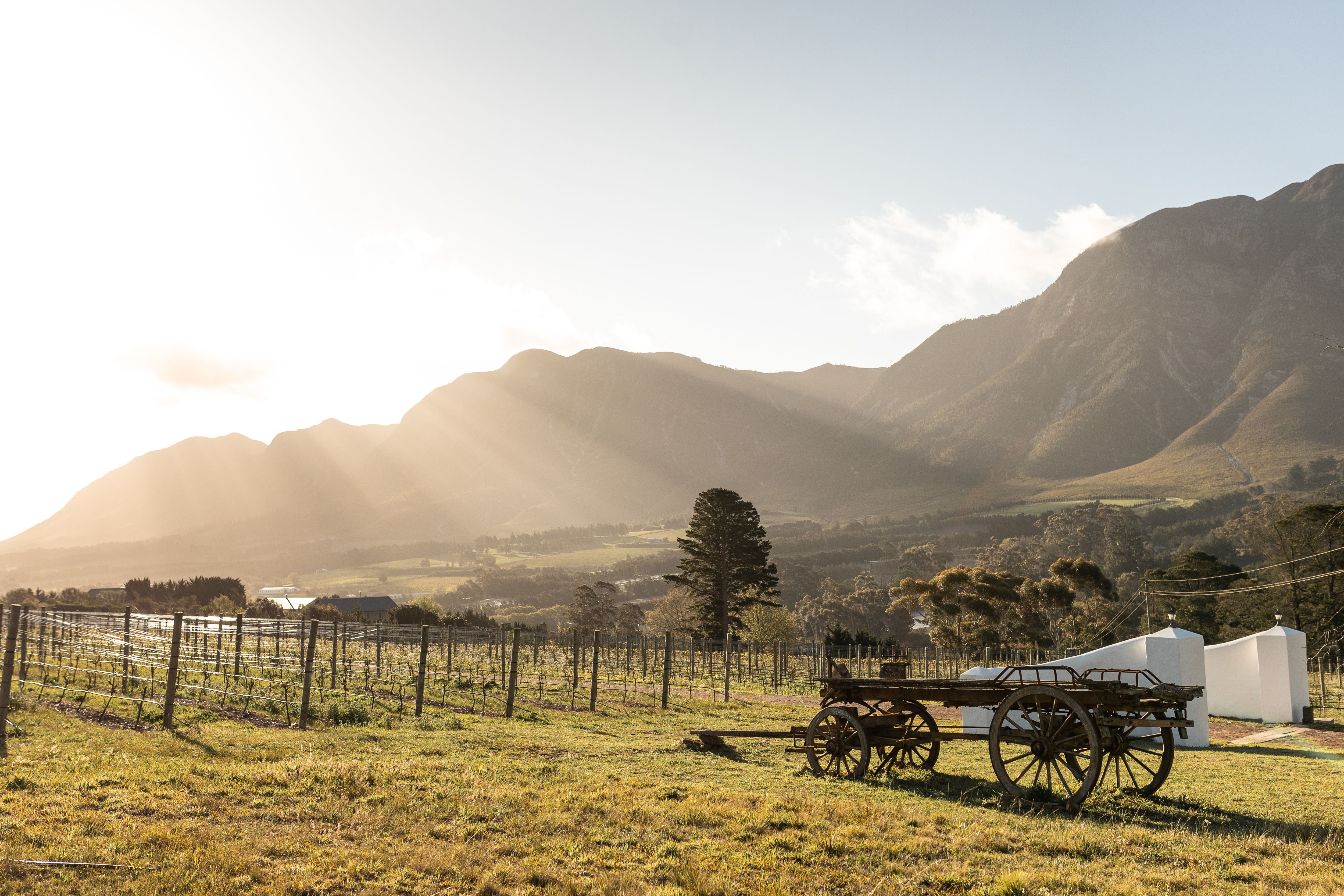
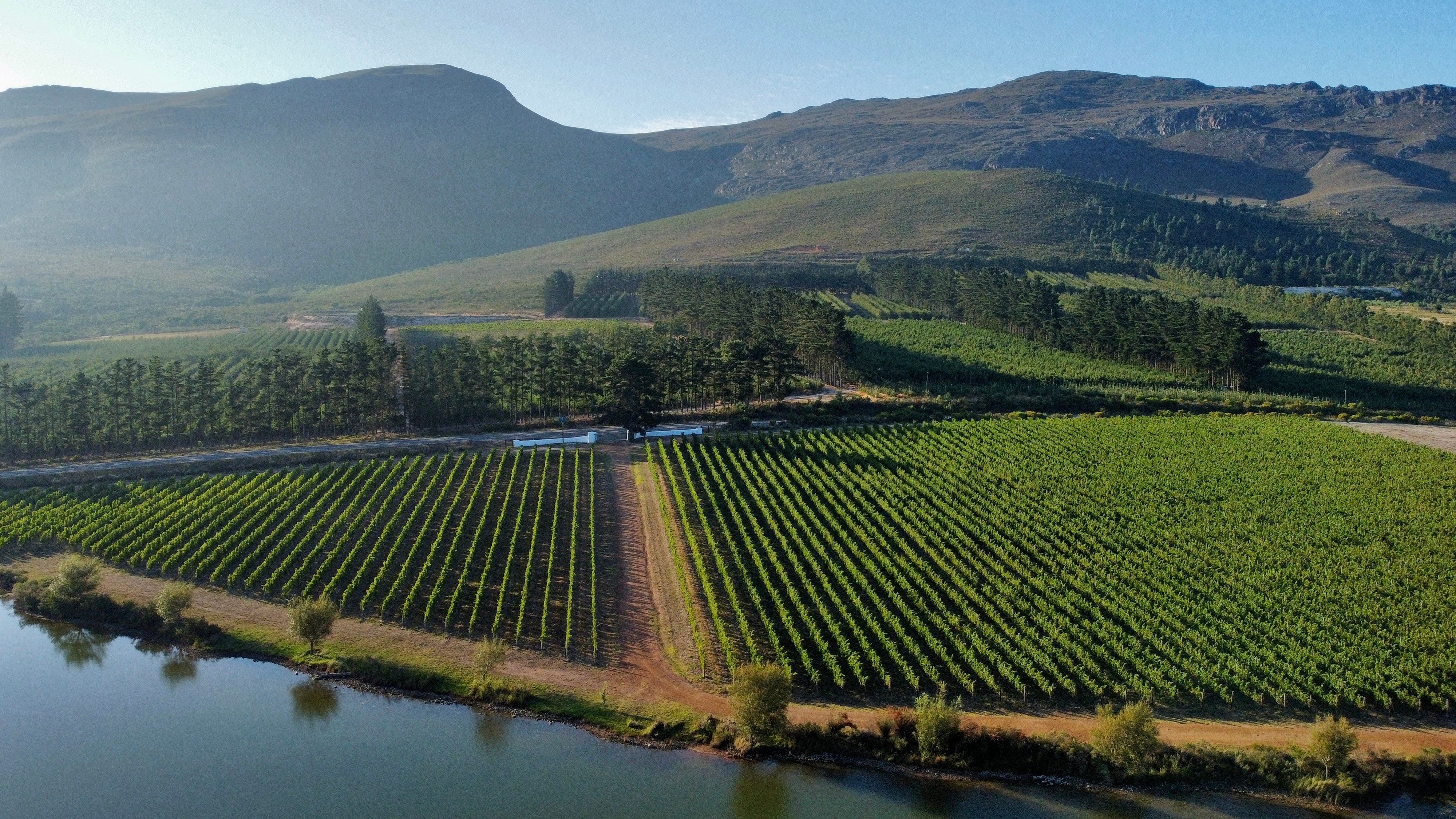
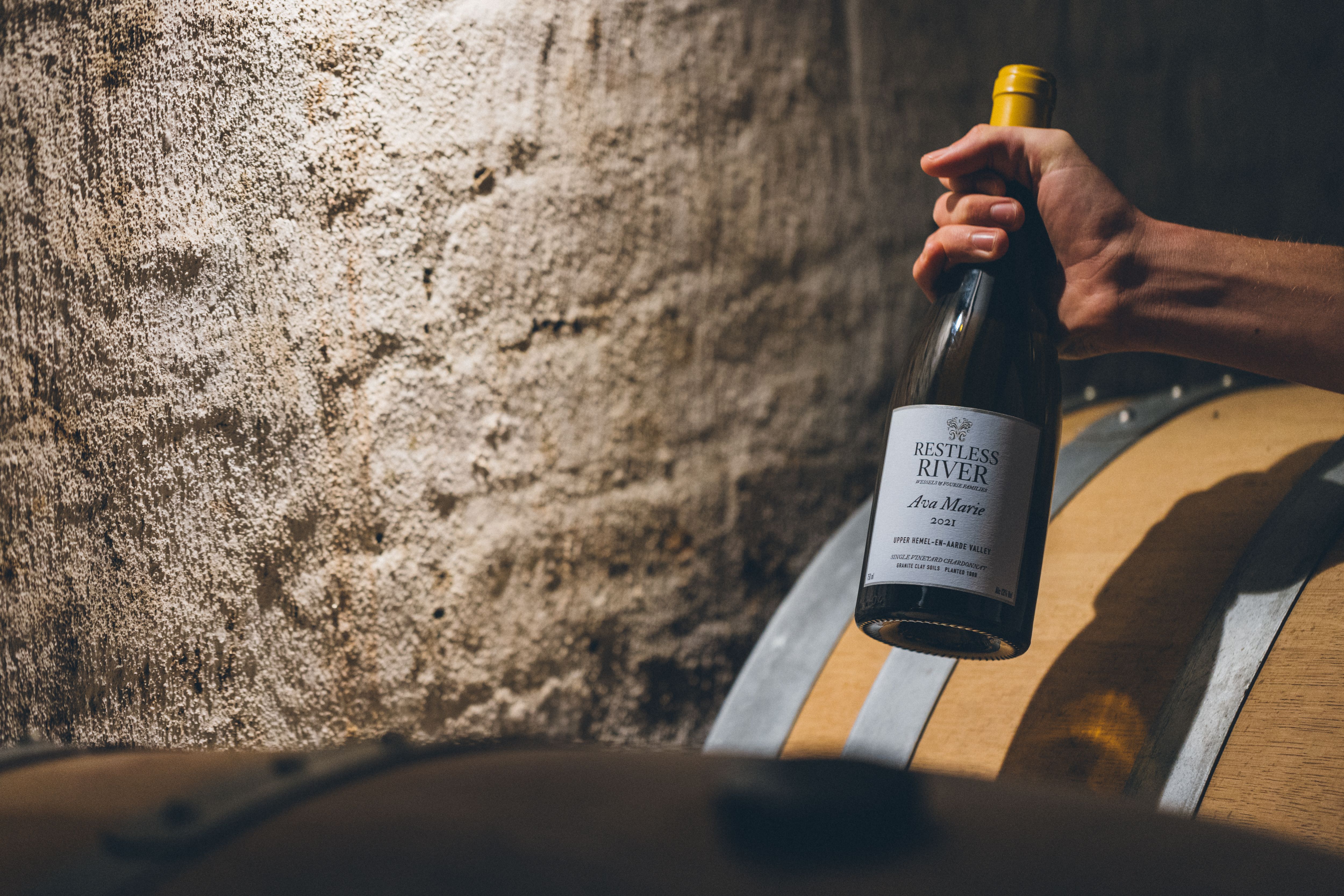
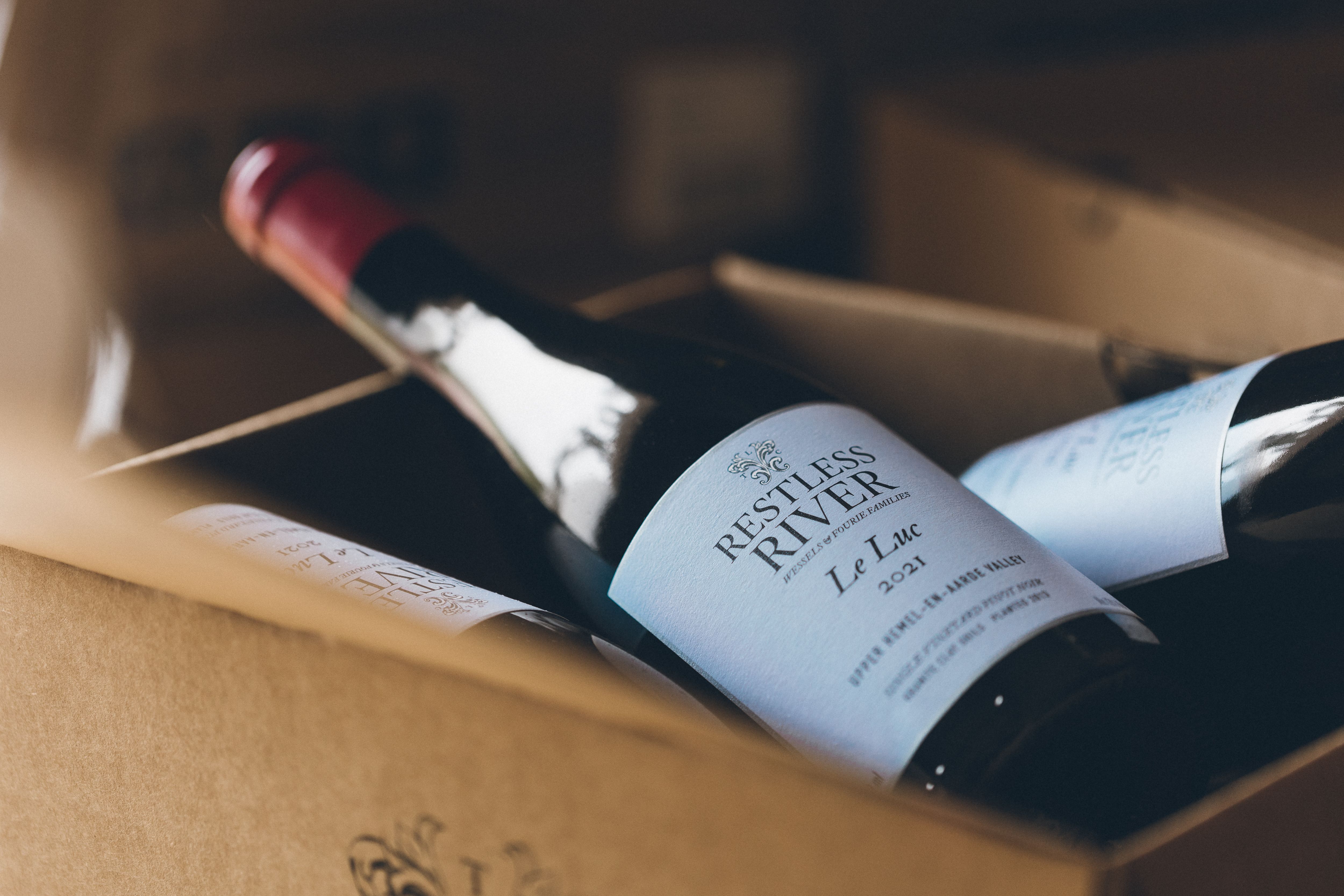
(L) The 'Ava Marie' vineyard, (R) The 'Le Luc' vineyard
What makes the 'Ava Marie' and 'Le Luc' vineyards so different despite being planted close together?
They are very different. 'Ava Marie' has a more southerly aspect and is cooler and much more varied in terms of soil composition. Some parts are rocky while others are sandy, the underlying clays differs too. I harvest the various parcels within the vineyard separately, often as many as ten picks over two or three weeks. Each parcel lends a different characteristic, and these are the building blocks that I use to create 'Ava Marie'.
I treat each parcel individually all the way from harvest through fermentation and élevage. Different parcels go into different barrels or vessels, and occasionally terracotta as well. Only after about a year do I begin assembling the final wine.
'Le Luc' on the other hand is north facing and therefore a little warmer, with very distinct soil changes throughout the northern and southern portions of the block. We planted three clones in certain parcels according to their soil profiles. If chardonnay had been planted in the 'Le Luc' vineyard instead of pinot, it would produce a completely different wine to 'Ava Marie'.
So, you think about a vineyard less as one block and more as lots of tiny components?
Exactly, our vineyards are not homogenous. Once you understand that, you start farming the smaller parcels within a vineyard slightly differently to one another, and the resulting wine from each parcel has a difference. This is what site-specific, terroir driven wines are all about, but at an even more granular level than talking about one vineyard as if it’s all the same throughout. Each parcel contributes something different, whether that is acidity, mouthfeel, fruit or tannin, and then the final wine becomes a composition built from all of those elements together, all within one vineyard. This is the level of detail we go to, and not many people know this about our wines.
You often speak about making wines that genuinely express place. What does that mean in practical winemaking terms?
Site-expressive wines require respect in both the vineyard and the winery. I feel the most important decisions are made in the vineyard. It starts with where you plant and what you plant, then also your viticultural practices, your team, philosophy, and how you manage soil, canopy and yields and of course, picking decisions that do not mask terroir – over or under ripe grapes mask the expression of site.
Then in the winery our role is mainly to avoid interfering in the natural processes that take place. We ferment with indigenous yeasts and work the fermenting wine very gently. It is the combination of yeast and temperature that is essentially doing the magic. I view my role as more of a guide; observing and making key decisions along the way that ensure the winemaking is respectful of the site, and at the highest level of quality possible, all with minimal interference. It’s actually a lot of work to do as little as possible.
Small decisions matter enormously. If you begin adding things like tannins, or extracting too aggressively during fermentation, you start overriding the natural expression of the fruit.
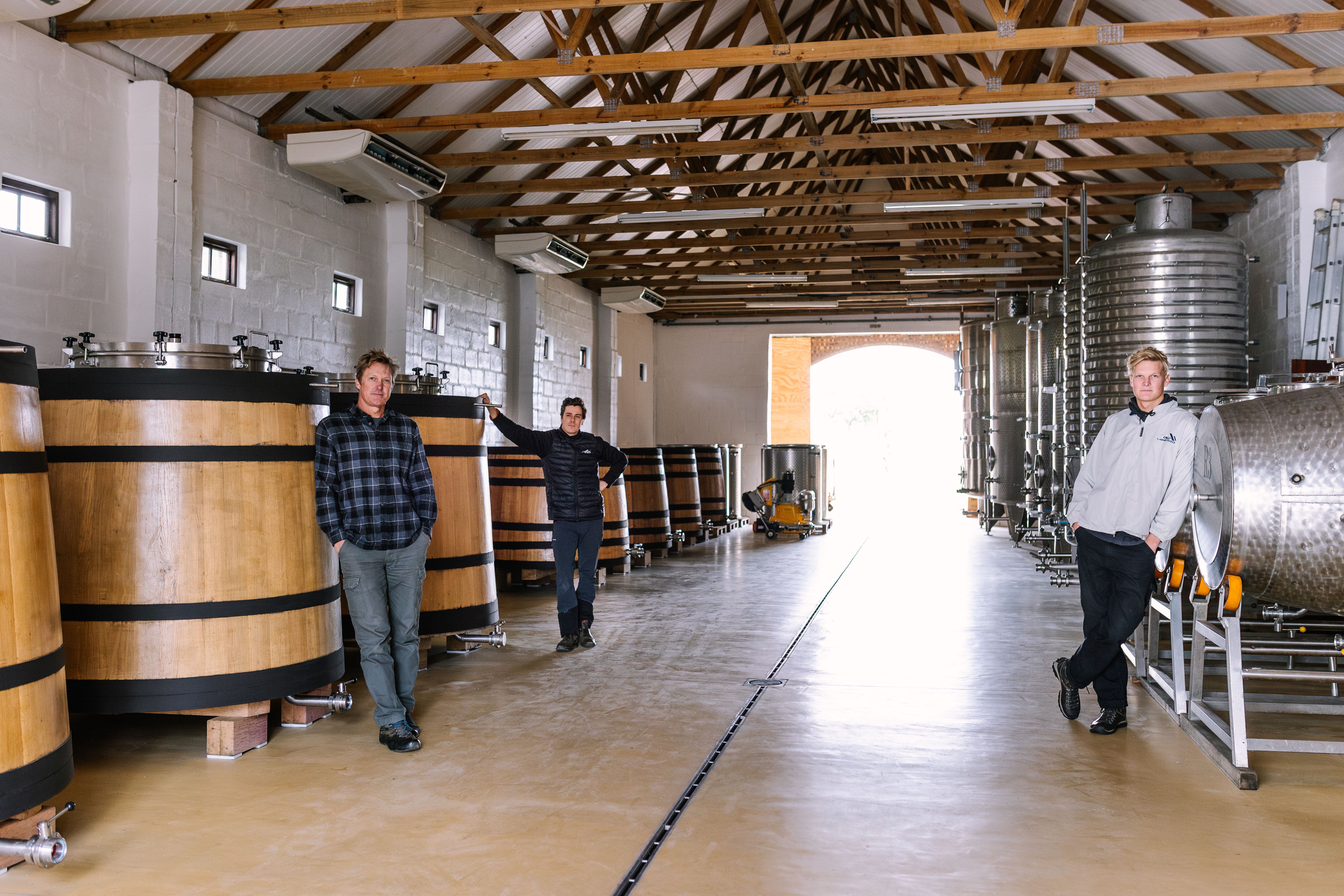
With this philosophy, I elect to work in very small batches of 15-25 hectolitres, which allows us to stay physically connected to every batch or ferment. By being close to it, doing things by hand as opposed to automation, you are constantly in contact with all your senses, and therefore smelling it, feeling it, looking at it, tasting it and even listening to it. By the end of fermentation, we are often wetting cap of skins entirely by hand. That closeness helps you understand what the wine is doing throughout the process.
You are tasting constantly as well. Winemaking is very similar to cooking in that sense. You cannot simply follow a formula or recipe dogmatically. Experience teaches you to work intuitively through observation, taste and feel.
But the important thing is that you never stop learning because there are too many variables in the vineyard, vintage and winery to ever fully master it. Every year is new, exciting, a challenge, and we only get one shot at it once a year.
How much has the Hemel-en-Aarde changed since you first arrived there?
Massively. When we first arrived in 1999, it was mostly gravel roads and rolling hills of fynbos, with some small sheep and apple farms hidden behind rows of windbreak trees. At that time, very few people even knew where the Hemel-en-Aarde was, let alone that wine was being made there.
Now it has become one of South Africa’s most important and sought-after wine regions. Bigger players are starting to move in, land prices have increased enormously and there is international attention on the wines.
Despite that growth, it still feels like the beginning of the region’s story because there are only around fifteen wineries here and 400ha of vineyards. In addition, we have the highest concentration of owner-run and farmed estates, with a number of the owners also the winemakers. Compared with other more developed regions, with hundreds of wineries and thousands of hectares of vines, the Hemel-en-Aarde remains small and focused, and mostly very family/generational orientated.
What is exciting is that the wines consistently punch high above their weight internationally, and I think the future is extremely bright, especially because the valley is well buffered against some of the harsher effects of climate change. During the Cape drought years, some of our best vintages came out of the Hemel-en-Aarde because we are both cooler in temperature and have a higher rainfall when compared to other wine regions. Overall, it is a very good place as a winegrower, both now and for the foreseeable future.
We are very fortunate where we are. I certainly would not want to be anywhere else, the future here is very positive, not just in a South African context, but globally.
For more information about purchasing Restless Rivers' wines, please contact your Account Manager. Not yet a customer? Contact Us to discuss opening an account.