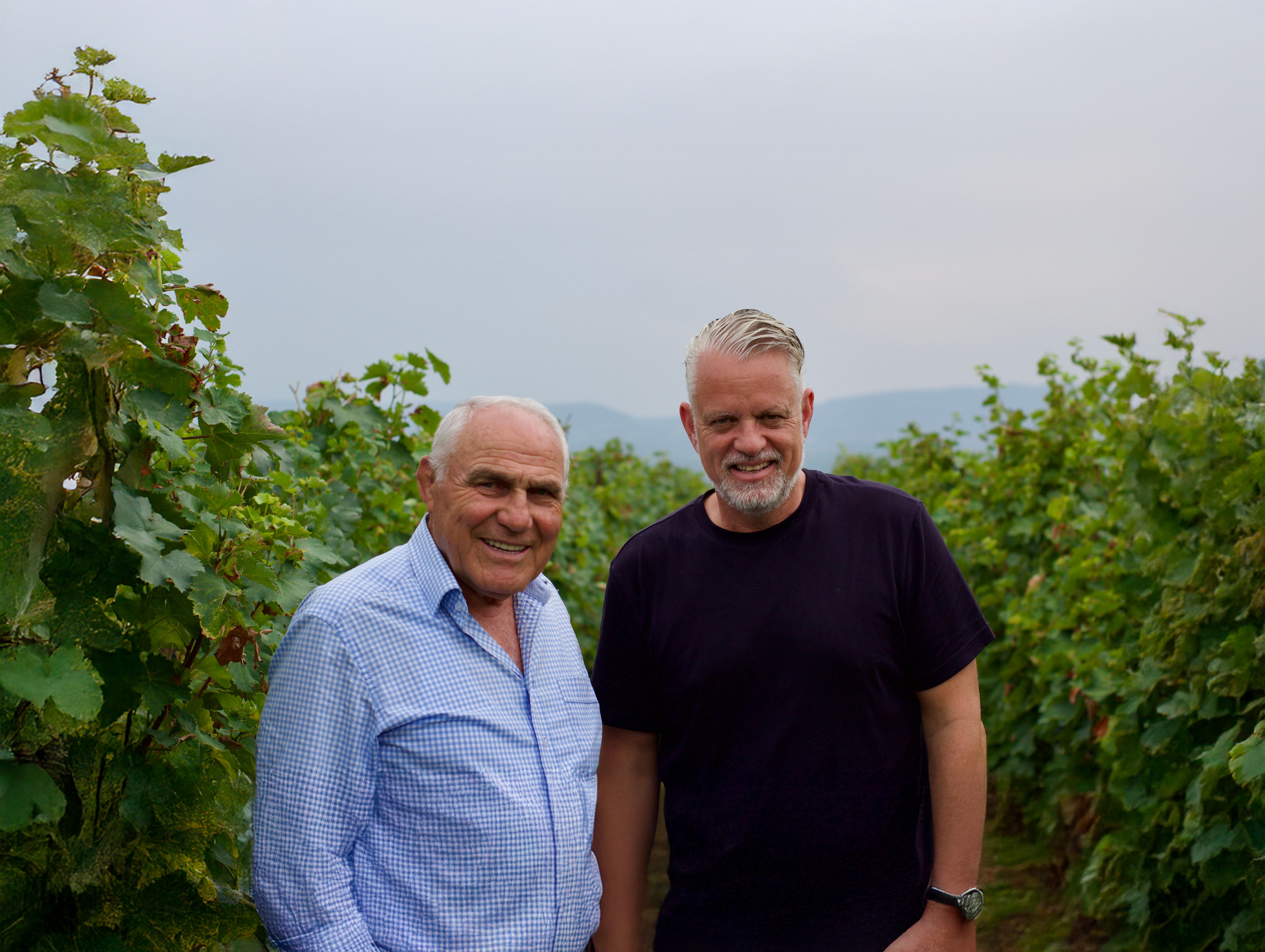
On a recent trip to Georgia, Gerry Gunnigan, Senior Salesperson for Liberty Wines Ireland, spent time with Tamaz Konchosvilli and Thierry Fontannaz (pictured above) at Bedoba in Kakheti (near the eastern border with Azerbaijan) along the Duruji River valley. Here he got to grips with Georgia's extensive winemaking history and how Bedoba bring together a heritage rooted in the old, new and ancient worlds.
In this article, Gerry shares this experience alongside photos from the trip, tapping into the heritage and culture that is so integral to the wonderful, distinctly Georgian wines Bedoba are making today.
For more information about purchasing Bedoba's wines, please contact your Account Manager. Not yet a customer? Contact Us to discuss opening an account.
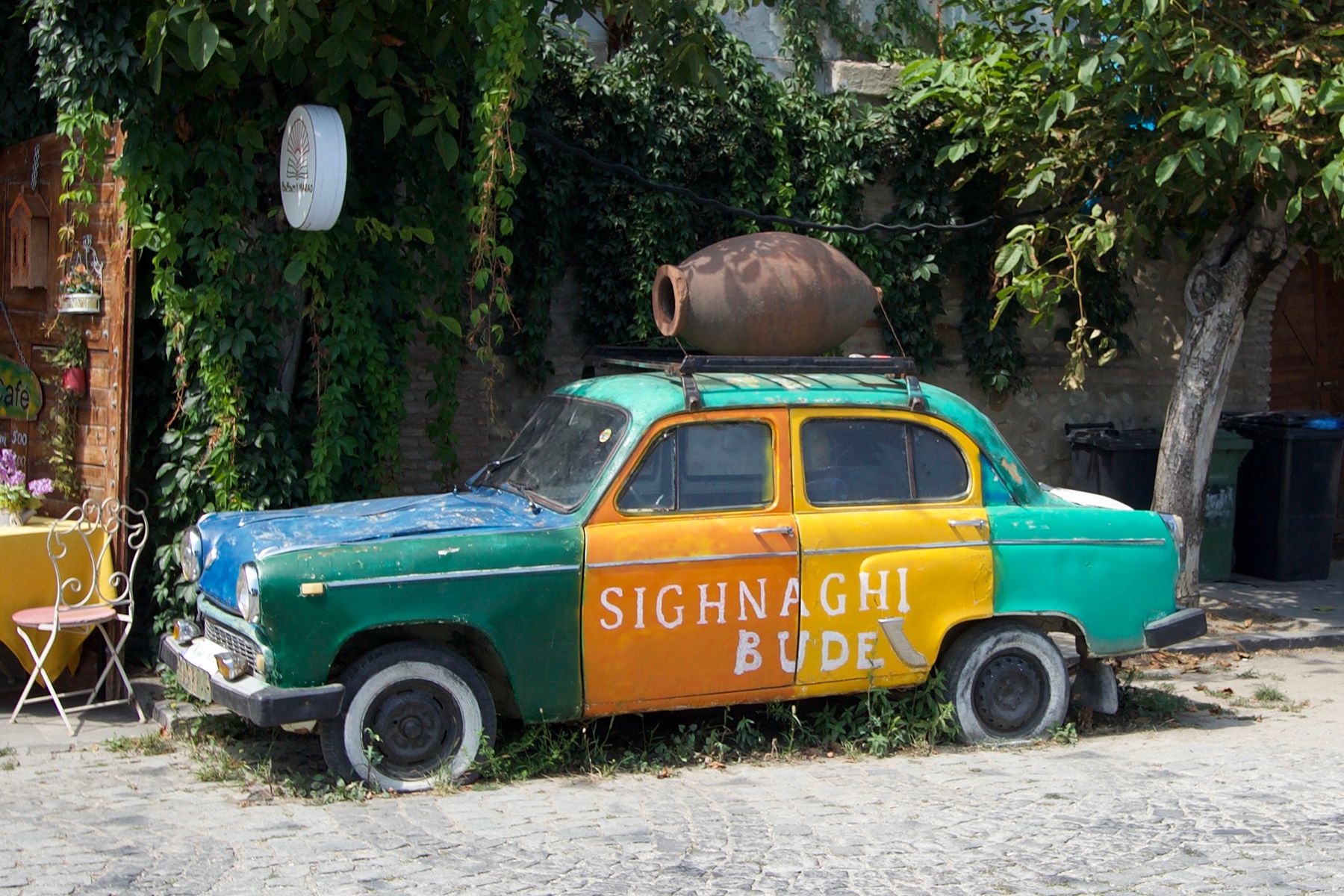
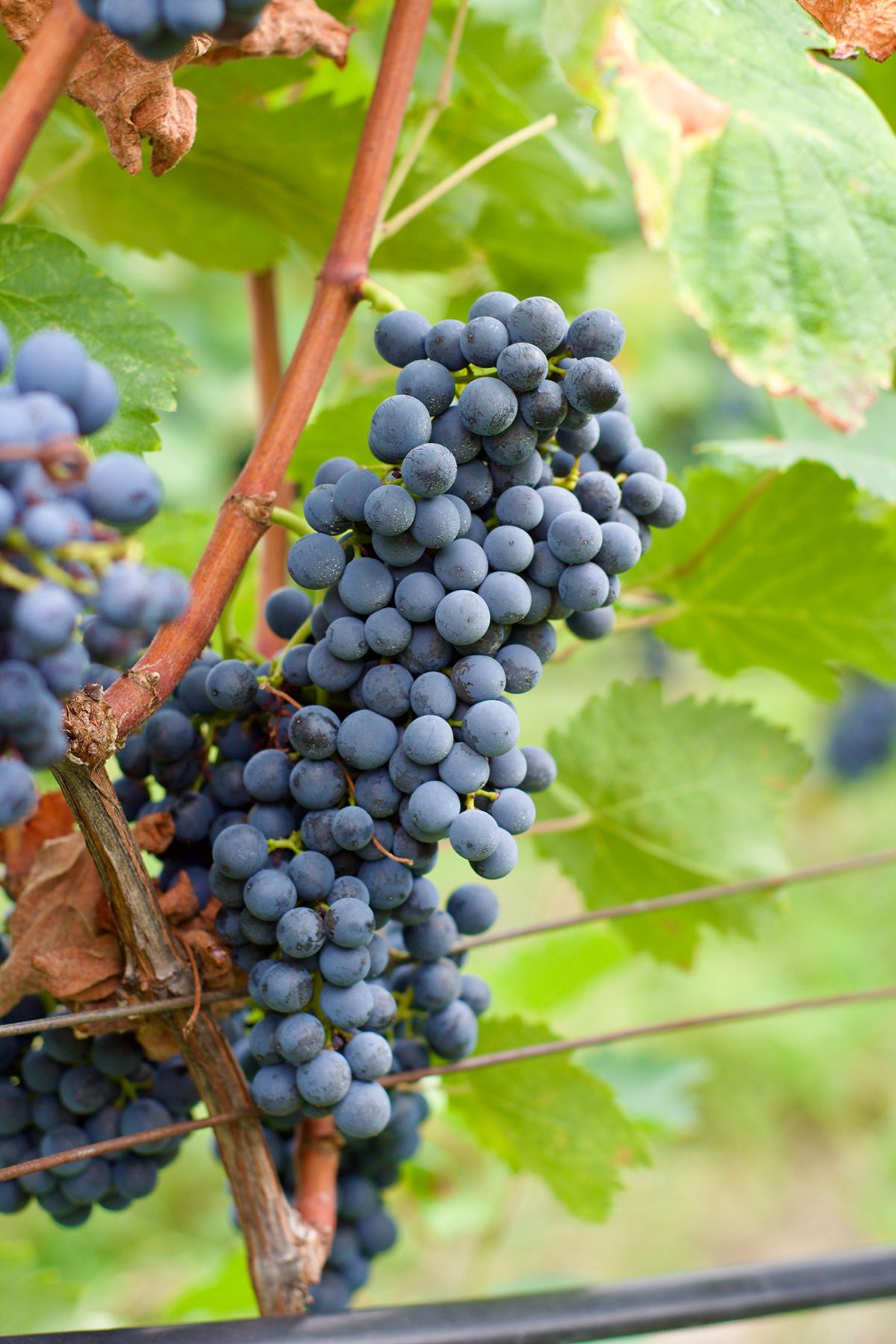
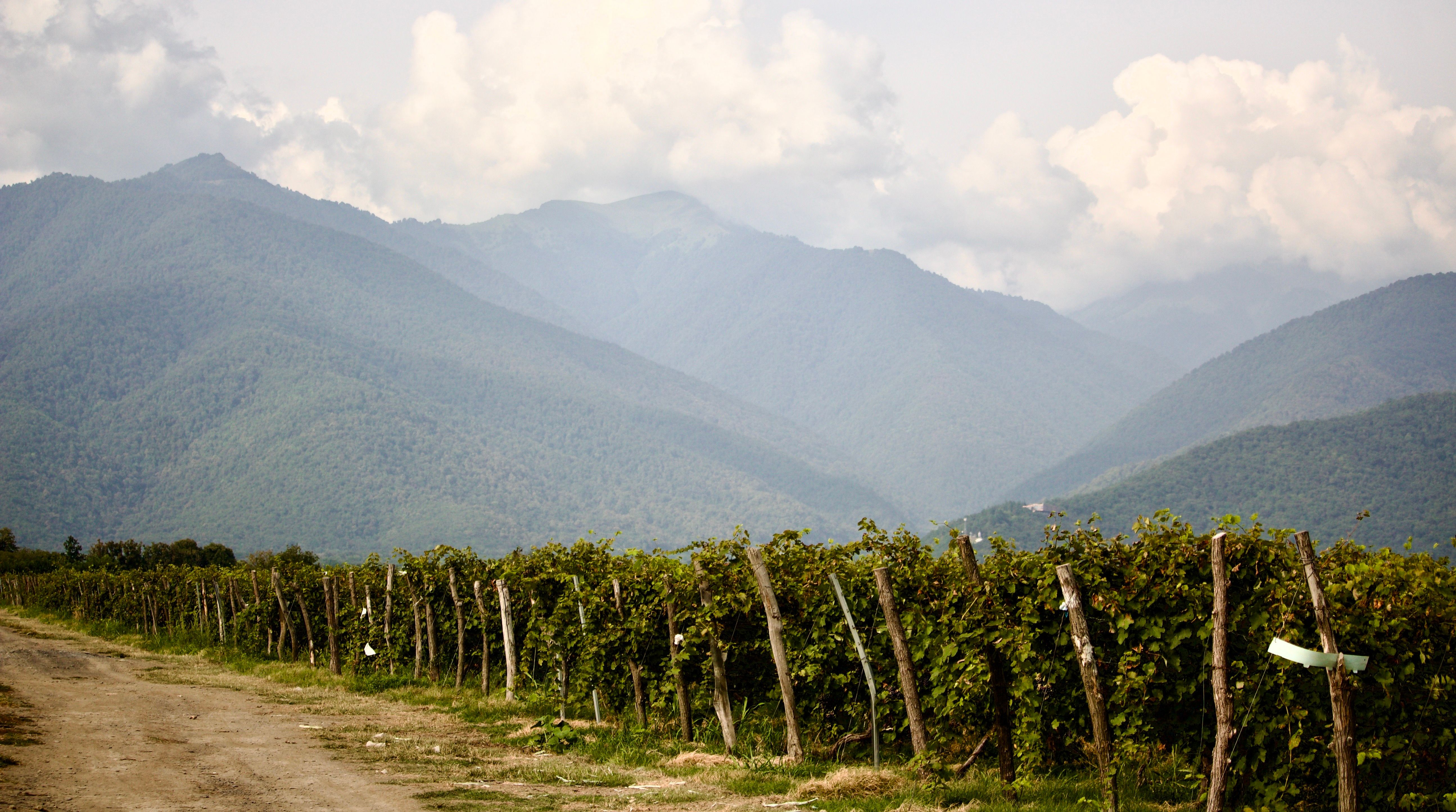
(L) Street in Sighnaghi, Khaketi, (M) Saperavi grapes ripening, (R) Vineyards in Kakheti with the Caucasus Mountains in the background
We tend to divide wine-producing countries into one of two categories: Old World and New World. Old World more or less corresponds to Europe, with viticulture and winemaking going back several hundreds or even thousands of years. New World is the designation given to wine-producing countries of the Southern Hemisphere and North America, with wine production dating back a few hundred years at most.
There is a case to be made for a third category: Ancient World. These are the countries where wine was born several millennia ago, as far back as 6000 BCE. They include Armenia, Iran, Azerbaijan, eastern Anatolia in Turkey, northern Iran, and the oldest of them all, Georgia. Over the millennia, these countries have developed unique winemaking methods that are still in use today and make styles of wine particular to their origins.
Grapes and wine are woven deeply into Georgian history and culture.
Archaeological explorations have unearthed artefacts thousands of years old with representations of vines and grapes. The Cross of Saint Nino, one of the most visible symbols of the Orthodox Church in Georgia, is said to have been made by the saint herself from the wood of grapevines and entwined with her own hair.
Despite having such a long and complex history, Georgian wine has remained relatively little known in markets such as ours. It’s only in recent years, when Georgia began to move away from its economic dependence on neighbouring Russia and looked to markets in Europe, that we started to see its wines available here.
A recent trip to Georgia to meet a South Africa-based Swiss native, who has been a champion of Georgian wine for over a decade, was a unique opportunity to see this incredible and historic wine country up close.
In 2014, Thierry Fontannaz was a buyer for a wine retail chain in Germany when he was invited by the Georgian government to visit the country for the first time. He almost didn’t go, but ultimately that trip changed his life. He met dozens of producers and tasted hundreds of wines over the course of the trip. One of those producers was Nugzar Ksovreli, who oversaw a company owned by his father-in-law, Tamaz Konchosvilli, in Kvareli, a town in the eastern region of Kakheti. Together they selected and blended a wine that was labelled for the German market, and it proved to be an instant success.
A few years later, Thierry moved with his family to South Africa and established his own wine trading company. His experience with Georgian wine in Germany prompted him to develop something for the wider market, so he returned to the Konchosvilli family winery in Kvareli. Working again with Nugzar and sourcing fruit from the family’s extensive vineyard holdings in Kakheti and Kindzmarauli, they created a red wine from the local Saperavi variety. The vineyards are located at the foot of the Caucasus Mountains and are primarily of black slate.
The method of making this wine combines ancient and modern. The Konchosvilli family winery was established in 1737 and has capacity for 200,000 litres in qvevri, the Georgian amphorae that are buried underground. Qvevri have been used in this part of the world for thousands of years, and the vessel is a symbol of Georgian winemaking. Combining these with large oak casks and stainless-steel tanks allowed Thierry and Nugzar to create a full-bodied, complex wine that would appeal to wine lovers in any market.
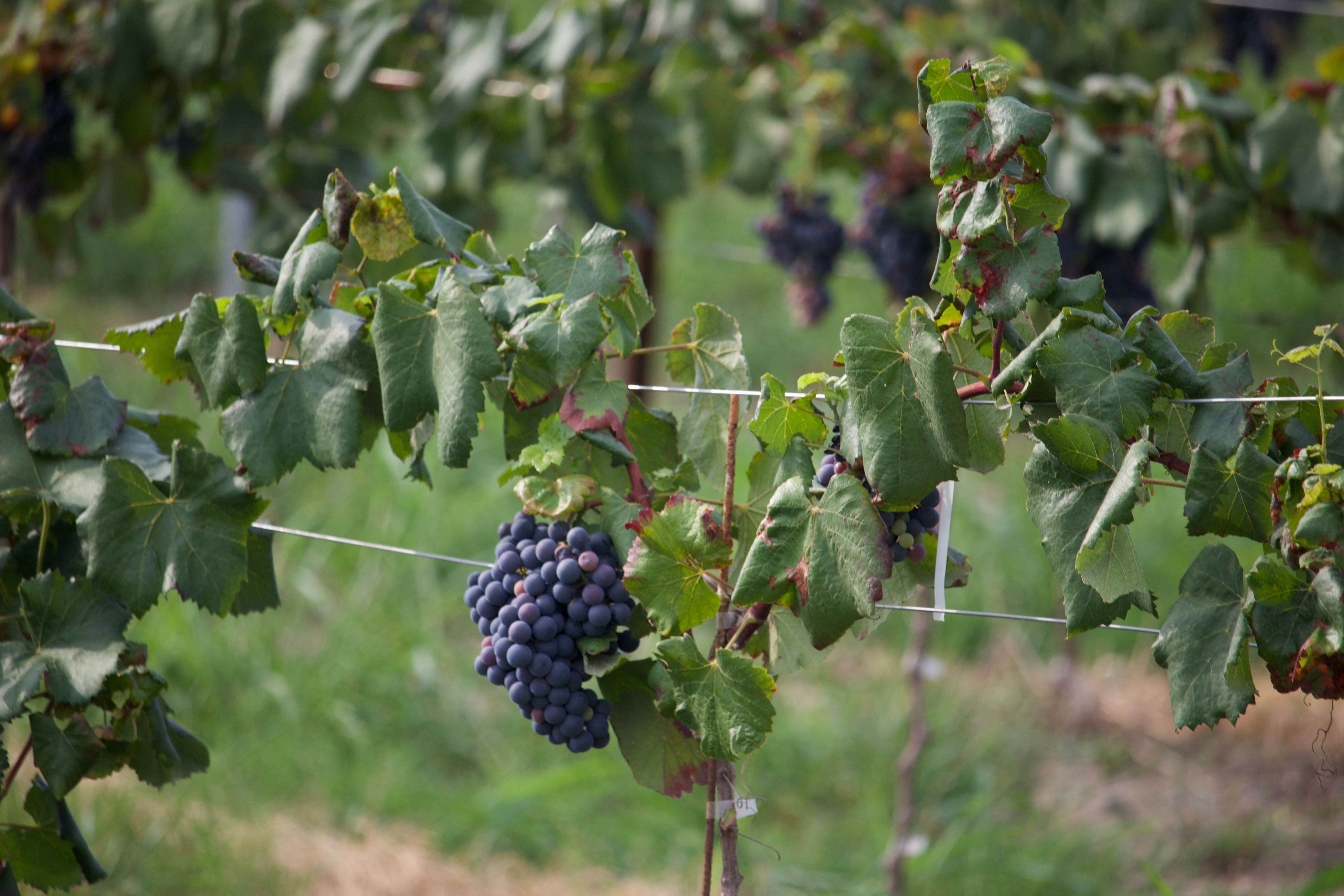
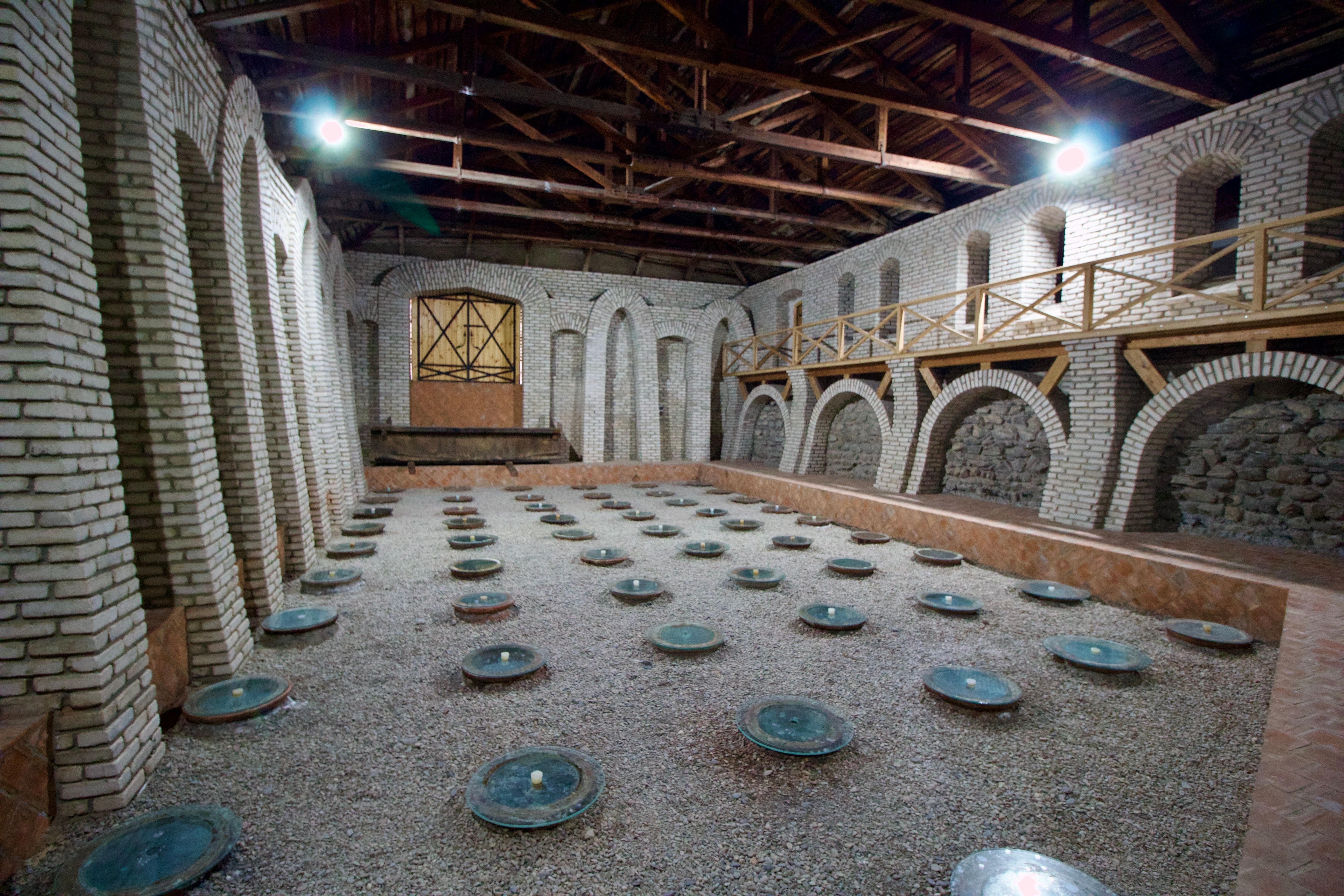
(L) Young Alicante Bouschet vines in Kakheti, (R) Qvevri cellars at the winery
The name they chose for the wine was Bedoba, which means ‘day of luck’. The tradition is that on the second day of the New Year, time is spent with family and friends, and this day will shape the fortunes of the year ahead. The label features Saint Nino, the fourth-century evangelist who converted King Mirian of Iberia (a region that roughly corresponds to eastern Georgia today) and his wife Nana to Christianity. They in turn mandated Christianity as the religion of their kingdom. The monastery of Bedbe in Kakheti is the shrine of Saint Nino, and a terrace beside the monastery affords a spectacular view of the vineyards of the Alazani Valley.
Bedoba offers four wines in their range: two reds, a white and an orange. The reds are both 100% Saperavi. In addition to the Saperavi described above, the Saperavi Reserve was first released last year. This is made from older vines and uses a lot more qvevri ageing giving a fine, elegant structure to a full-bodied and rich red.
For many, Orange Wine is the signature of Georgian winemaking. Fashionable in many countries now, this method has a long history here. White grapes (Rkatsiteli in the case of Bedoba) are harvested and put immediately into qvervi and left on the skins. Following fermentation, the vessels are sealed and left alone for about six months, after which the solids are separated from the liquid. The other component, another local grape called Kisi, is fermented as a normal white wine in stainless steel and blended with the Rkatsiteli from the qvevri in the spring following the harvest. The wine is then returned to the qvevri for further ageing. The result is a wine of amber colour (in Georgia it is referred to as ‘amber wine’) with notes of dried apricot, citrus peel and herbs.
Orange wine can be found everywhere in Georgia and is a great accompaniment to traditional Georgian cuisine like khinkhali, the meat and broth filled dumplings.
The Bedoba White is also a blend of Rkatsiteli and Kisi, in the same proportions as the Orange (70/30). Qvevri are again used in making this wine, but without skin contact. A proportion of malolactic fermentation and lees contact gives this fresh white a generous texture and mouthfeel.
Georgian wine is undergoing a renaissance at the moment as more and more consumers in Europe and elsewhere discover its charms. Bedoba has been a smash hit since the Saperavi was launched here in 2022. The addition of the Orange, White and Saperavi Reserve has widened its appeal even more.
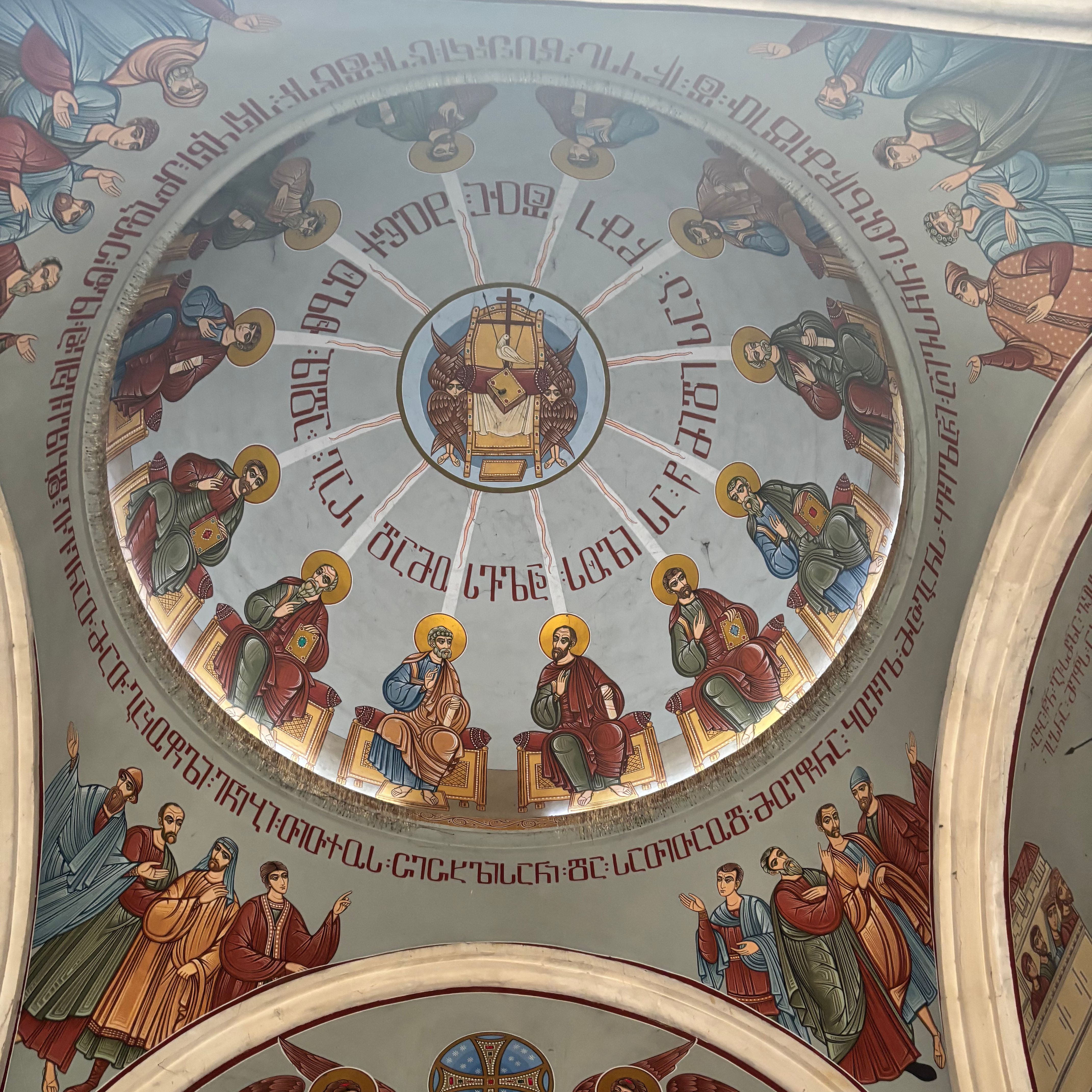
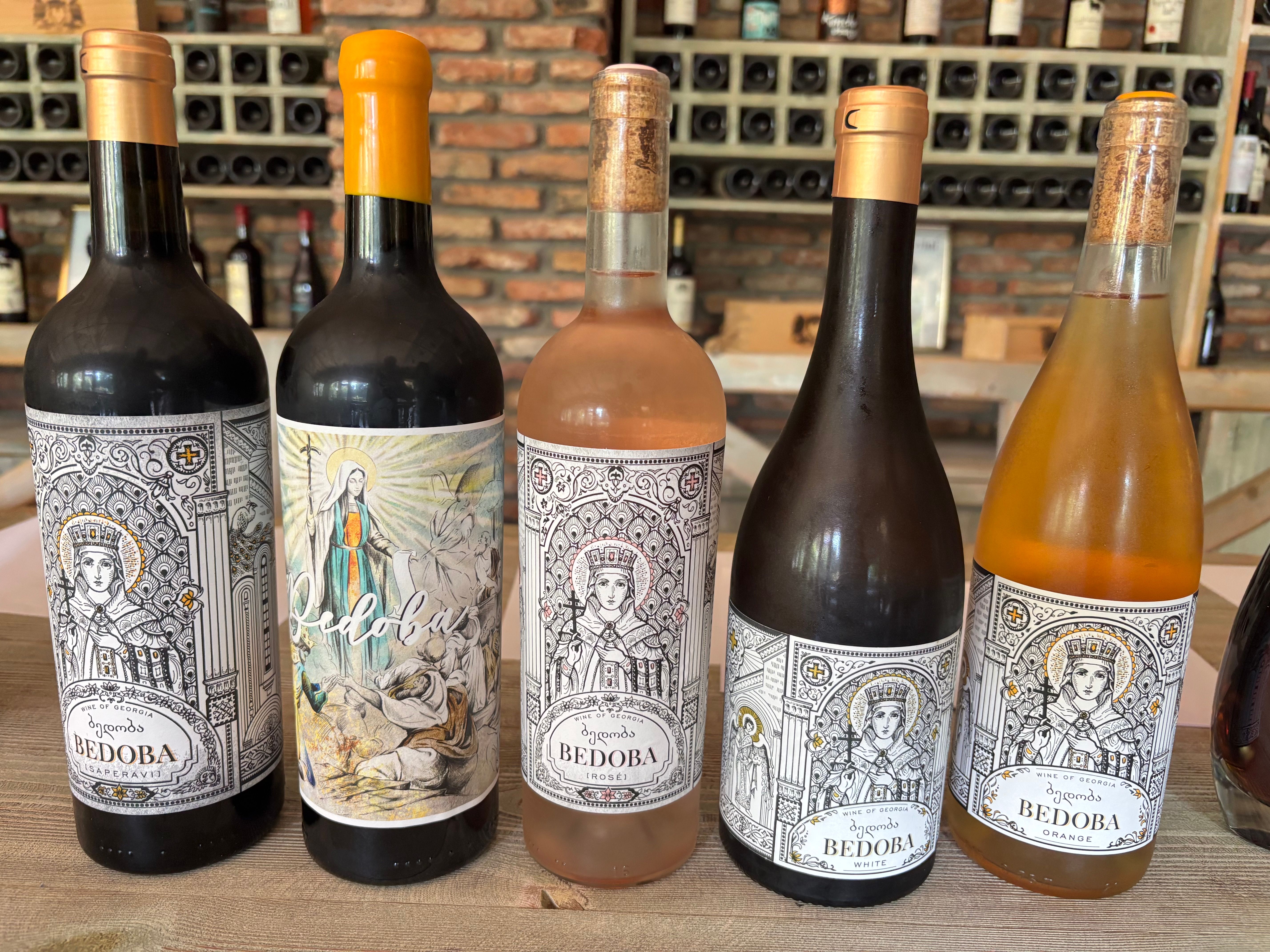
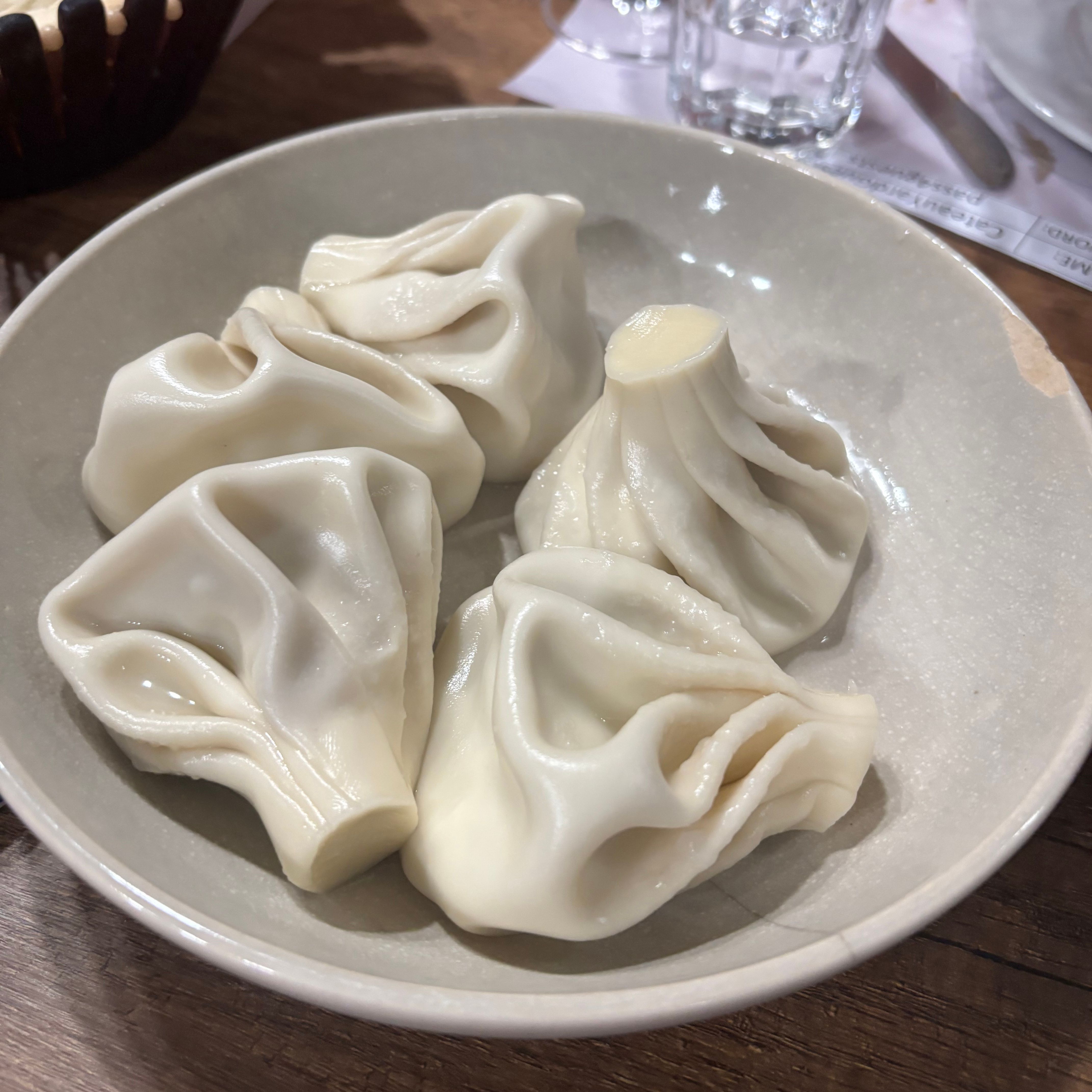
(L) Murals at Kashueti St George Church, Tbilisi, (M) the Bedoba range, (R) Khinkhali – dumplings filled with minced meat, herbs spices and a special broth
For more information about purchasing Bedoba's wines, please contact your Account Manager. Not yet a customer? Contact Us to discuss opening an account.