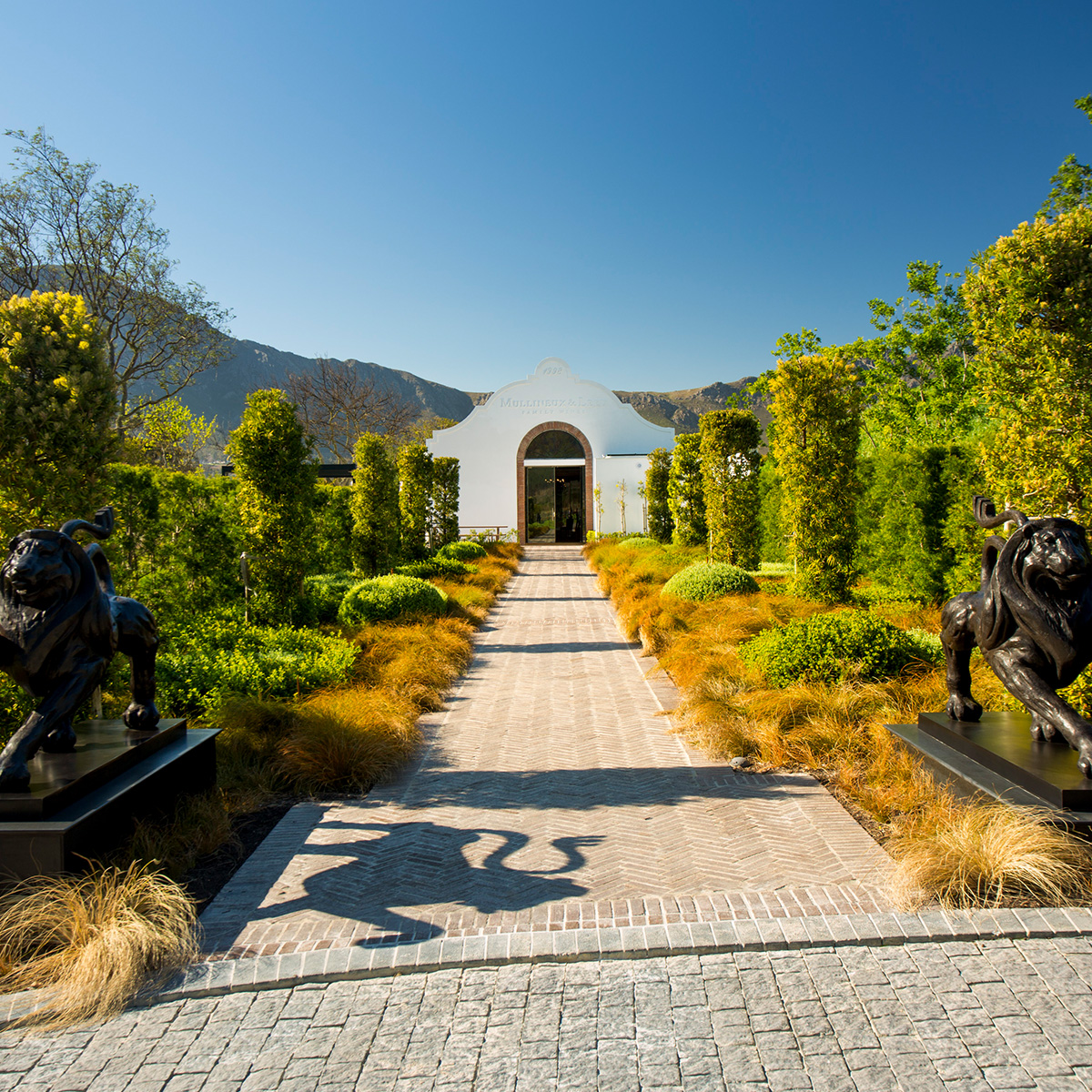
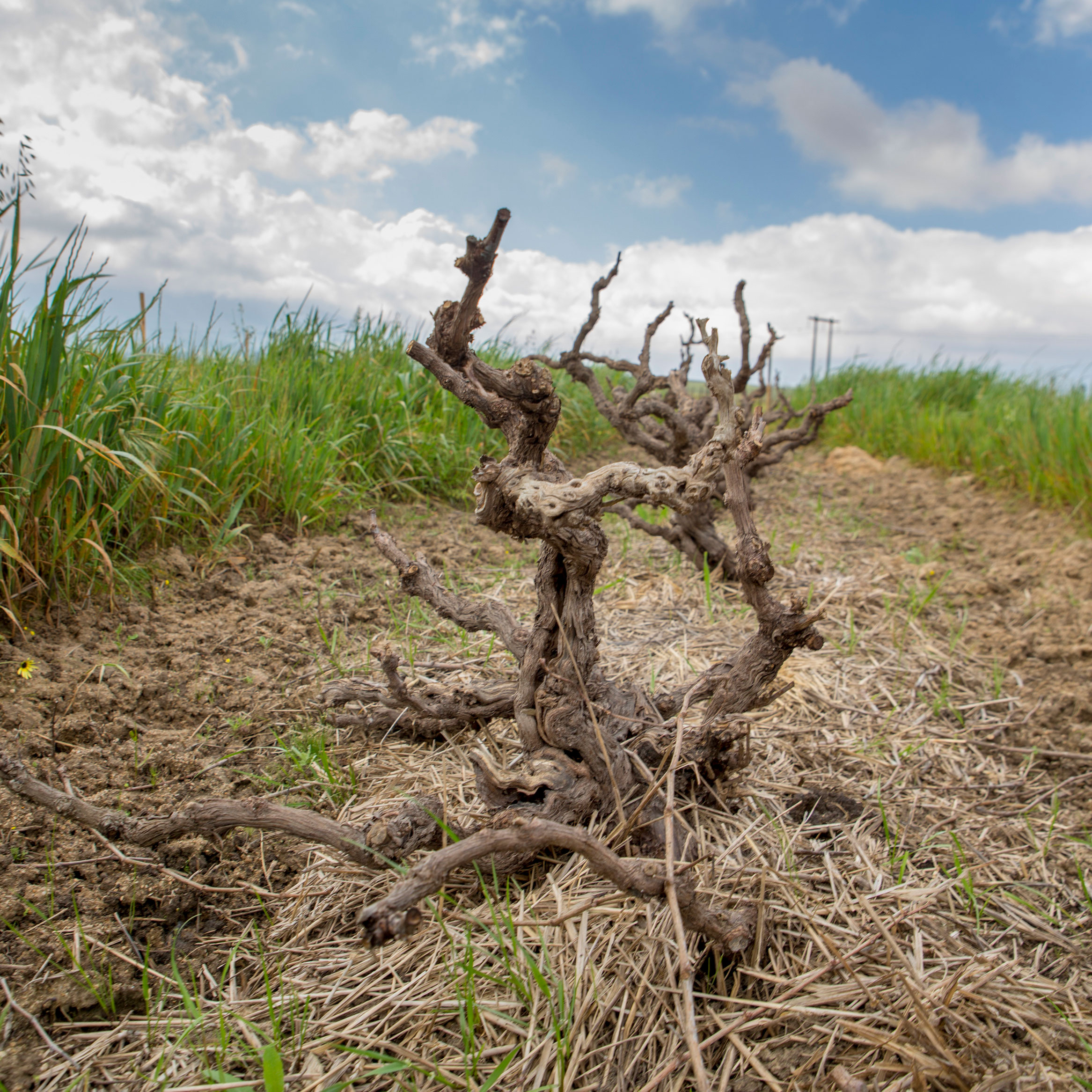
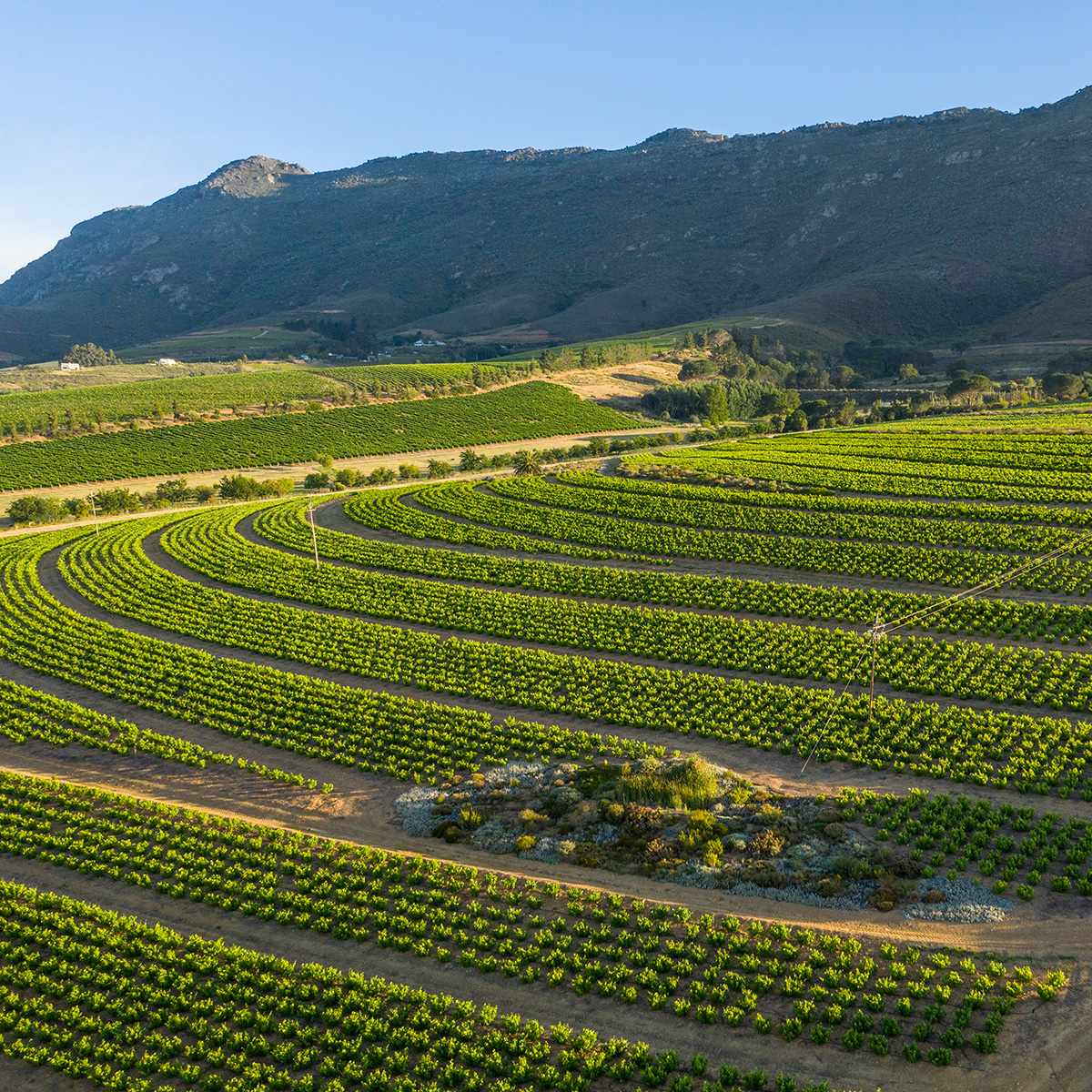
Founded by Chris and Andrea Mullineux in 2007, Mullineux is one of the most lauded wineries in South Africa, having been named ‘Winery of the Year’ five times by the Platter’s Wine Guide (in 2014, 2016, 2019, 2020 and 2023). Chris and Andrea chose the town of Riebeek-Kasteel, just west of Malmesbury in the Swartland, due to its old vineyards planted on granite and schist soils. They reasoned that, with such quality fruit, they could make outstanding wines. It is an understatement to say they have been proved right.
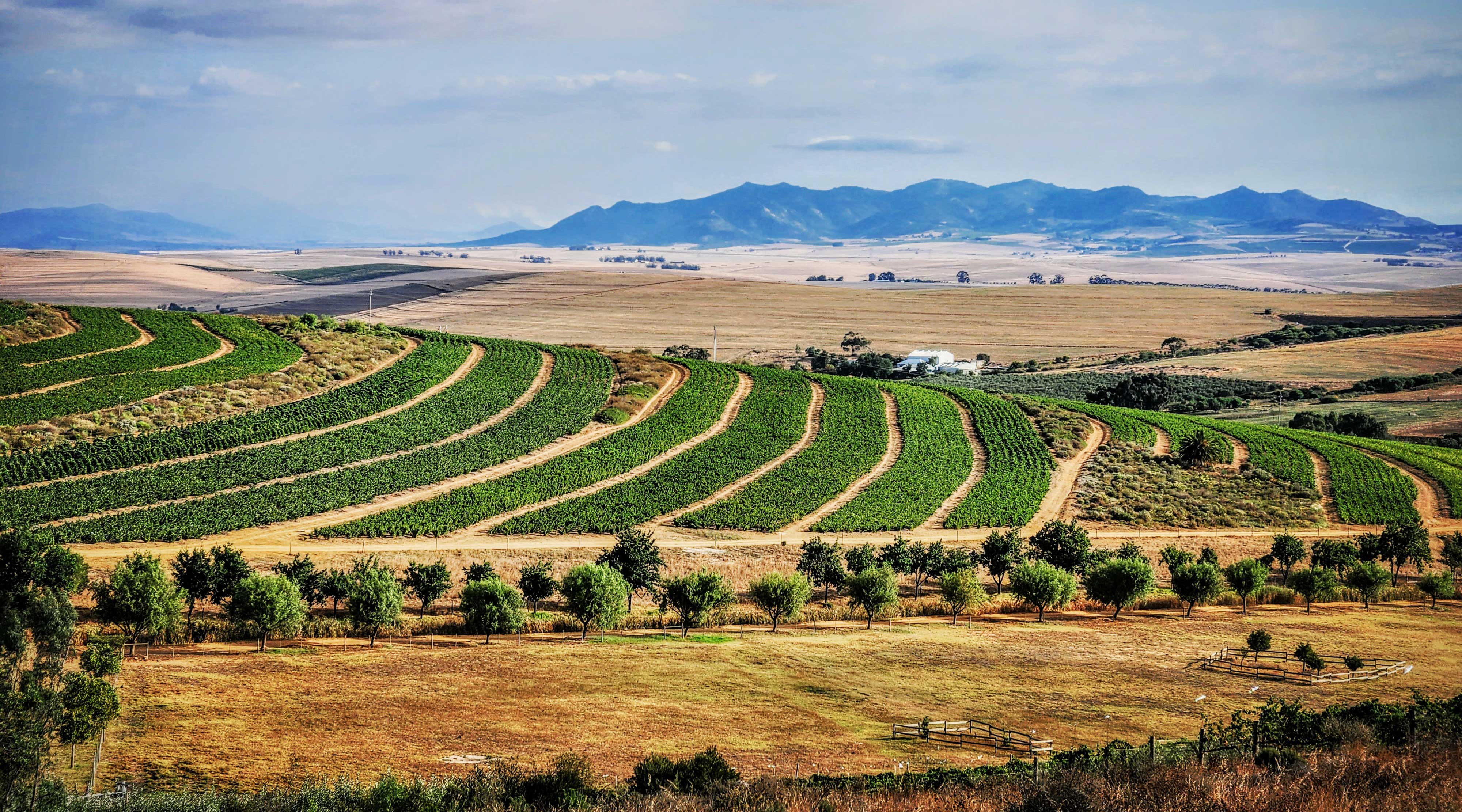
The Swartland is warm and dry in the summer, benefiting from a cooling afternoon breeze from the Atlantic Ocean, which borders the region to the West. Disease pressure is low, which, in turn, means spraying is kept to a minimum. Mullineux’s philosophy is rooted in sustainable and regenerative viticulture. Their home vineyard, ‘Roundstone’, is a testament to this. The fashion for monoculture in the 1970s and 1980s bypassed the Swartland. Mullineux’s vines are interspersed with native species like fynbos, which provide a habitat for native insects and supersede the need for pesticides. Cover crops, composting, and careful attention to soil vitality allow the estate to retain water more efficiently. The rows are also planted along the contours of the land to reduce soil erosion. In 2025, Mullineux received full Organic Certification (with Ecocert) and will soon be the first winery in South Africa to achieve Regenerative Organic Certification. By enhancing soil health and making their vineyards more resilient, the wines are more vibrant, complex and expressive.
Mullineux’s latest wine, ‘Roundstone’, exemplifies their dedication to forward-thinking viticulture. This pure expression of their home vineyard blends newer plantings of drought-resistant Mediterranean varieties with old vine Syrah. It marries the vibrancy of the sun-ripened fruit and texture of its warm climate with an attractive purity and freshness.
Their ‘Single Terroir’ Chenin Blancs and Syrahs are produced in limited quantities. Working with three main soil types: granite, schist and iron, Andrea and Chris believe that soil is “the biggest fingerprint” on their wines. All the grapes are harvested at the same ripeness level and vinified identically, meaning the wines are truly expressive of the soils on which they are grown. The ‘Granite’ wines are characterised by elegant, perfumed fruit and nervy acidity, while the ‘Schist’ wines’ shallow, rocky and well-drained soils that produce a ripe, spicy profile. Conversely, the ‘Iron’ wines tend to be the most structured and fullest-bodied.
The Mullineux ‘Signature’ range boasts an ‘Old Vines’ White, a Syrah, and two ‘Straw’ Wines. ‘Old Vines White’ is sourced from eight low-yielding (between three to six tonnes per hectare) vineyards in the Swartland. It is predominantly Chenin Blanc, blended with a touch of Semillon Gris, Clairette Blanche, Grenache Blanc, Viognier, and Verdelho. It is barrel fermented and aged in a combination of old French oak 500-litre barrels and 2,000-litre foudre. For the Syrah, 90% of the fruit is whole bunch fermented, which creates a lovely structure and balance, with the tannins corseting ripe, voluptuous fruit. The wine is aged in oak for 20 months before bottling.
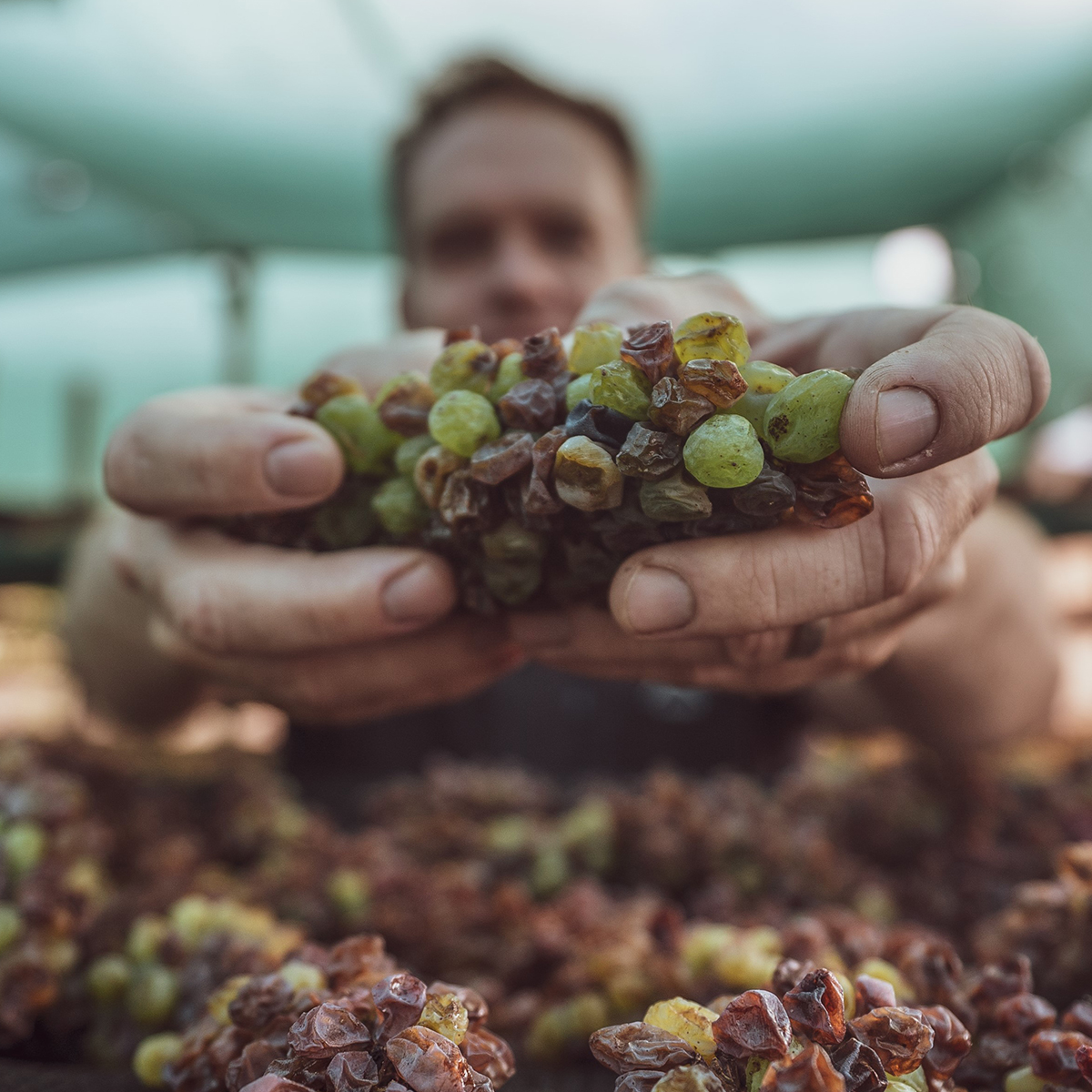
The ‘Straw Wine’ is made from old vine Chenin Blanc harvested at normal ripeness levels and air-dried for three to four weeks, concentrating the sugars, flavours and, most importantly, acidity. It is slowly pressed and fermented in old barrels, creating notes of dried fruit, marmalade, marzipan, and honey. The rare ‘Olerasay’ Straw Wine is undoubtedly one of the world's great sweet wines. Produced from barrels which have been fractionally blended from vintage 2008 through to 2024, it has layers of complexity, nuttiness, and depth.
All wines from this producer
Producer | Wine | Product Code | Features | Style | |
|---|---|---|---|---|---|
| Signature | Old Vines Swartland White Blend | MU103 | W | Factsheet | |
| Swartland Syrah | MU104 | R | Factsheet | ||
| Signature Straw Wine | MU105 | Sw | Factsheet | ||
| Olerasay 3º Straw Wine Chenin Blanc | MU117 | Sw | |||
| Single Terroir | `Granite` Swartland Chenin Blanc | MU106 | W | Factsheet | |
| `Granite` Swartland Syrah | MU108 | R | Factsheet | ||
| `Schist` Swartland Syrah | MU109 | R | Factsheet | ||
| `Iron` Swartland Syrah | MU110 | R | Factsheet | ||
| `Schist` Swartland Chenin Blanc | MU115 | W | Factsheet | ||
| `Iron` Swartland Chenin Blanc | MU116 | W | Factsheet |